CAPDR Organizes the VIA MOLDAVIA Working Meeting Dedicated to the Valea Trotușului Micro-Destination – Spa, Nature, Heritage and Leisure
Mesaje publice
On September 8, 2026, Slănic Moldova hosted a new VIA MOLDAVIA Working Meeting dedicated to the Valea Trotușului Micro-Destination – spa, nature, heritage and leisure
Organized by the Centre for Regional Development Analysis and Planning – CAPDR, the meeting was part of the process of designing and operationalizing the tourism micro-destinations within the VIA MOLDAVIA Northern Route, with a focus on identifying local resources, mapping the territory and connecting the tourism offer within a regional network.
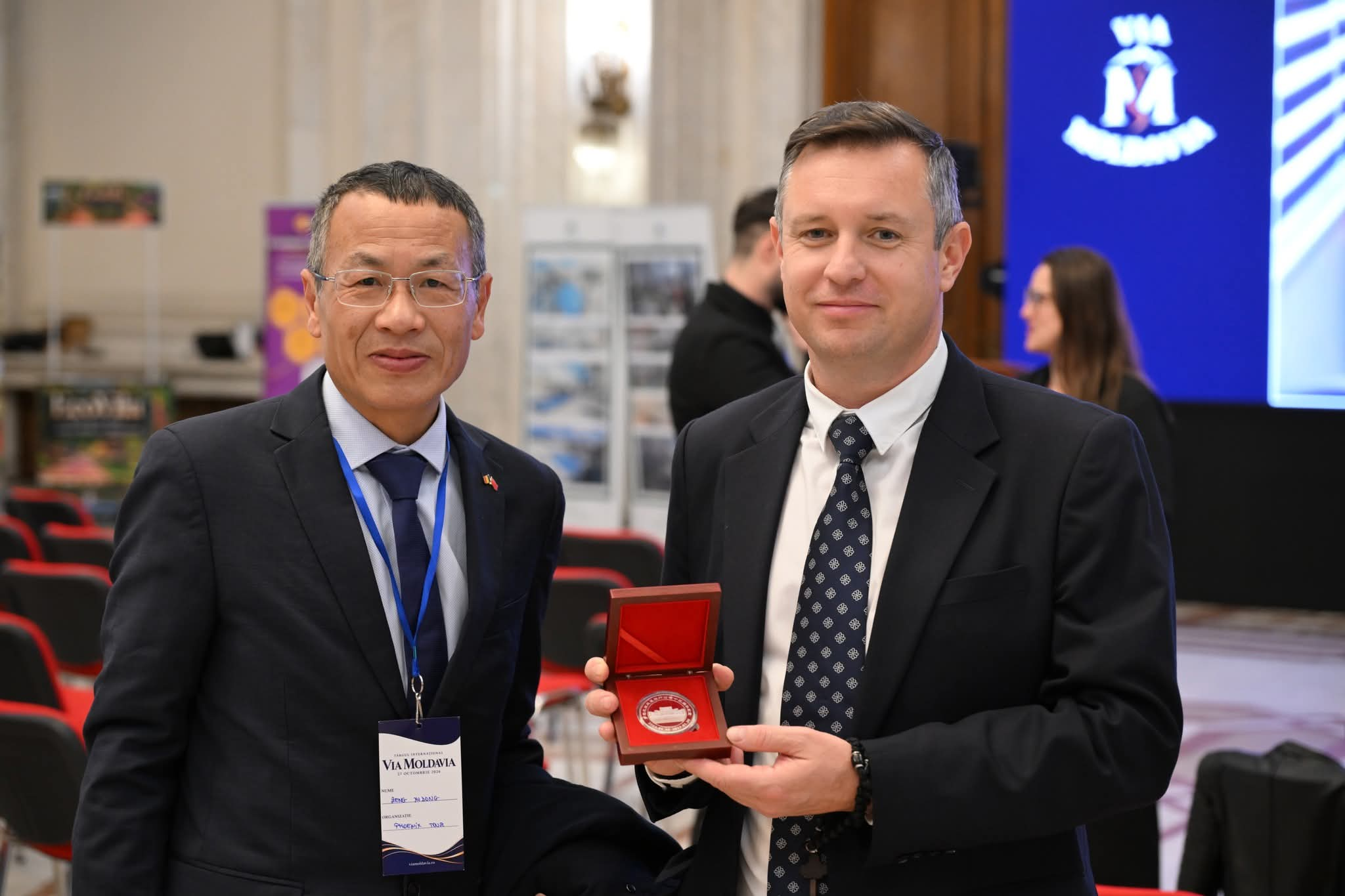
Held at Panoramic Complex Slănic Moldova, the meeting brought to the forefront a territory with a complex tourism profile, where the spa component meets nature, heritage and leisure activities.
The Valea Trotușului – RN-09 micro-destination has an indicative territorial area that includes Bacău, Dărmănești, Mănăstirea Cașin, Asău and Slănic Moldova, and is approached within VIA MOLDAVIA as a territory capable of bringing together and transforming tourism resources, services, experiences and routes into a coherent offer. The official programme calendar confirms the inclusion of the Slănic Moldova meeting in the series of meetings dedicated to the VIA MOLDAVIA micro-destinations – Northern Route.

An Approach Built from the Territory
The Valea Trotușului meeting was designed as an applied working meeting, with the objective of building an operational picture of the micro-destination: what resources exist, where they are located, how they can be connected and how they can be transformed into tourism experiences and products.
This approach is part of the overall VIA MOLDAVIA architecture, in which the territorial network builds the offer, the back office verifies and updates it, and the VIA MOLDAVIA application transforms it into an easy-to-discover and easy-to-use tourism experience.
Within this mechanism, the micro-destination represents the level at which local resources are identified and structured, the route connects them regionally, and the network enables their validation and integration into a broader tourism offer.
Mapping Valea Trotușului – From Resources to Offer
One of the central elements of the meeting was the actual mapping of the micro-destination, starting from a central point and using a standard radius of 20 kilometres.
The VIA MOLDAVIA methodology aims to inventory the six components of the tourism offer: accommodation, gastronomy, attractions, events, experiences and services.
This structure takes into account hotels, guesthouses and other forms of accommodation, restaurants and gastronomic products, cultural and religious heritage, landscapes and natural attractions, local events, nature, family, adventure, sports, wellness and medical tourism experiences, as well as the services required for a complete tourism experience.
Mapping is not limited to simply listing attractions. For each relevant point, its location, access, travel time, opening hours and availability, capacity, contact details, content, potential for integration into routes and responsibility for verifying the information are recorded.
Thus, the micro-destination map becomes an operational tool for tourism product development, rather than merely an inventory of attractions.

From Tourist Attractions to Integrated Experiences
One of the important principles of VIA MOLDAVIA is moving from the promotion of individual attractions to the creation of integrated tourism experiences.
In the case of Valea Trotușului, the proposed profile – spa, nature, heritage and leisure – provides the framework for structuring an offer that makes complementary use of the territory’s resources.
Resources are analysed from the tourist’s perspective: where the journey begins, how much time is available, what the budget is, what type of experience is sought, how the tourist travels, and whether they remain in the micro-destination or continue their journey to another area.
In this way, several points of interest can be connected into a one-day route, an experience lasting several hours, a 2–3-day product or a broader regional circuit.
Valea Trotușului, Part of a Regional Network
The micro-destination is not viewed as an isolated territory. The meeting was part of a regional approach in which the local offer is connected with the other micro-destinations of the Northern Route, and subsequently with the Central Route and Southern Route.
The VIA MOLDAVIA methodology seeks to identify entry and exit points from the micro-destination, main routes, secondary connections and circuits that can extend the tourist’s stay. It also considers 2–7-day inter-micro-destination circuits and subsequent connections with the Romania–Republic of Moldova cross-border component.
This perspective transforms tourism development into a process of connecting territories, in which each micro-destination can become a starting point for other regional experiences.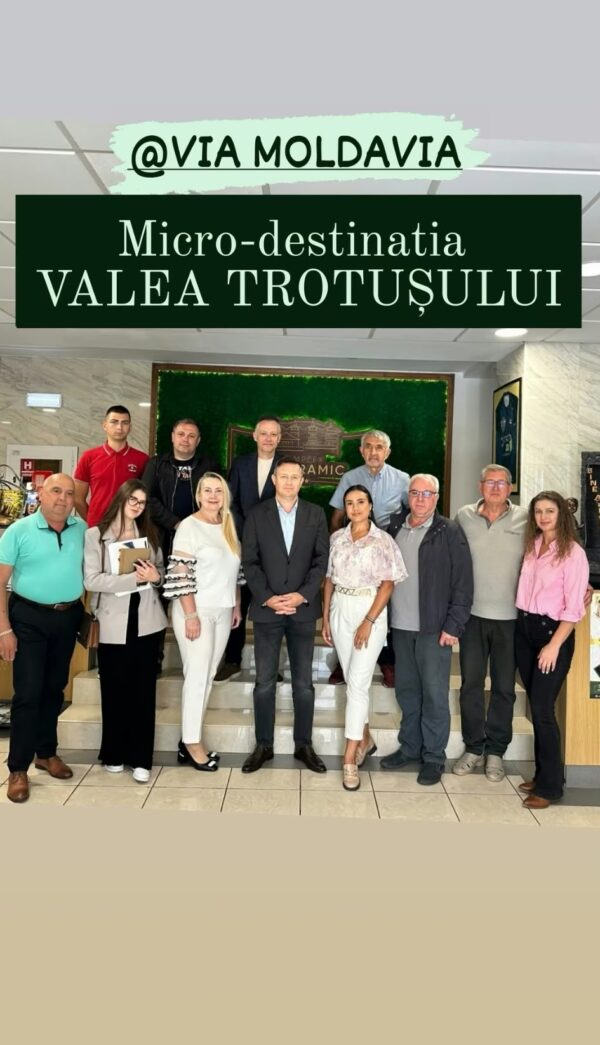
EVENT PARTICIPANTS:
- Ion ȘTEFANOVICI, President, C.A.P.D.R.
- Benone MORARU, Mayor, Slănic Moldova City Hall
- Alina SOVA, Tourism Manager, Panoramic Complex, Hotel Dobru, Slănic Moldova Casino and Teleconstrucția Villa
- Marcela LAZAROIU, Territorial Representative, Ministry of Culture
- Cristi SAVA, Deputy Director, Bacău County Public Service for Tourism Promotion and Mountain Rescue
- Olivian DARIE, Specialist Inspector, Bacău County Public Service for Tourism Promotion and Mountain Rescue
- Romil BOTEZATU, Director Cosa Gigi, Bacău County Public Service for Tourism Promotion and Mountain Rescue
- Gheorghe BACIU, President, Slănic-Moldova Balneoclimatic Institute
- Cristian ABABEI, Deputy Director, Slănic Moldova House of Culture and Promotion
- Emilian BUDACĂ, Mayor, Asău City Hall, Bacău
- Andreea DANA, Restaurant Manager, Cascada Slănic
- Ștefan Gabriel DESFNIESCU, Restaurant Manager, Cascada Slănic
- Raluca RUSU, Cascada Slănic
- Nicoleta ANISCAN, Administrator, Vatra cu Bere
- Bogdan SOVA, Tourism Manager, Teleconstrucția Villa
- Teodora SOLOMON, Receptionist, Montana Inn Slănic Moldova
- Gheorghe TERZEA, Administrator, EDI Tourist Complex
- Violeta GURGUTĂ, Căsuța Prieteniei
- Dan Valentin BUSNEA, Journalist
- Nadia HÎNCU, Network Manager, C.A.P.D.R.
- Andreea CUCOȘ, Manager, C.A.P.D.R.
- Denisa-Bianca MATEICIUC, Sales Department, C.A.P.D.R.
Slănic Moldova – Spa Identity and Tourism Potential
Discussions in Slănic Moldova started from one of the main resources defining the local identity: the spa profile of the resort. Participants emphasized the need to capitalize on this component more broadly by connecting spa services with nature, relaxation, wellness, leisure and the other experiences available in the territory. From this perspective, the resort can move beyond an approach focused exclusively on treatment and medical recovery and develop a tourism product aimed at a much more diverse audience.
“Slănic Moldova has the advantage of a strong spa identity, but this resource needs to be capitalized on through a broader tourism offer. We should not speak only about medical recovery, but about a destination where spa tourism meets nature, relaxation, wellness and tourism experiences,” Ion ȘTEFANOVICI, President, C.A.P.D.R.

Infrastructure – A Prerequisite for Tourism Development
Another important topic of the meeting was the infrastructure required to support tourism development. The discussions highlighted the fact that the potential of a destination cannot be capitalized on without accessibility, tourism infrastructure and functional connections between the localities that form part of the micro-destination. In the case of Valea Trotușului, the approach proposed through VIA MOLDAVIA specifically aims to connect resources and services from several localities into a common offer. The RN-09 micro-destination includes, indicatively, Bacău, Dărmănești, Mănăstirea Cașin, Asău and Slănic Moldova.
“Tourism development in Slănic Moldova cannot be separated from infrastructure. We need investment and better connectivity between localities so that the area’s tourism resources can be accessed and capitalized on together,” Benone MORARU, Mayor, Slănic Moldova City Hall
Valea Trotușului – A Micro-Destination Built through Cooperation
An important direction of the discussions was cooperation among the localities in Valea Trotușului. Participants started from the idea that tourists do not perceive a territory through administrative boundaries, but through the experiences they can discover in a particular area. Therefore, Slănic Moldova needs to be connected with the other localities and attractions in the micro-destination so that routes and tourism products can be developed at territorial level.
“We cannot build tourism products with each locality working separately. Slănic Moldova, Asău, Târgu Ocna and the other localities in Valea Trotușului need to complement one another and jointly build routes and experiences that encourage tourists to stay longer in the area,” Alina SOVA, Tourism Manager, Panoramic Complex, Hotel Dobru, Slănic Moldova Casino and Teleconstrucția Villa

From Tourist Attractions to Experiences
The meeting also addressed the need to change the way the tourism offer is built. The existence of individual tourist attractions is not enough; they need to be connected with services, gastronomy, accommodation and activities in order to generate integrated tourism experiences. The VIA MOLDAVIA methodology aims to inventory six components of the offer – accommodation, gastronomy, attractions, events, experiences and services – and integrate them into tourism routes and products.
“Tourists are not looking only for an attraction to visit. They are looking for an experience. That is why it is important to connect nature, leisure activities, sport, heritage and the spa component into an offer that tourists can easily discover and enjoy,” Cristi SAVA, Deputy Director, Bacău County Public Service for Tourism Promotion and Mountain Rescue

Sport and Leisure – Opportunities to Diversify the Offer
Participants also identified the need for diversification of tourism activities, including through the development of sports and leisure infrastructure. The discussions also mentioned tennis courts and the possibility that such facilities could contribute to expanding the resort’s tourism profile. Developing complementary activities can attract families, groups, active tourists and visitors who are not exclusively interested in the spa component.
“Diversifying activities is important so that Slănic Moldova can offer tourists more than treatment and relaxation. Sport and leisure can become important components of the tourism product and can contribute to increasing the resort’s attractiveness,” Olivian DARIE, Specialist Inspector, Bacău County Public Service for Tourism Promotion and Mountain Rescue
The Private Sector – A Partner in Building the Micro-Destination
Another central point of the meeting was the involvement of the private sector in developing the micro-destination. Representatives of accommodation units, restaurants and tourism structures from Slănic Moldova attended the meeting, enabling discussion of the operators’ real needs and of how the private offer can be connected into a common tourism product. Participants included representatives of Cascada Slănic, Vatra cu Bere, Vila Teleconstrucția, Montana Inn Slănic Moldova, Complex Turistic EDI, Cazinoul Slănic Moldova and Căsuța Prieteniei.
“Local operators must be an active part of the process of building the micro-destination. Hotels, restaurants, spa centres and experience providers need to be connected into a common offer that can be promoted and marketed together,” Emilian BUDACĂ, Mayor, Asău City Hall, Bacău

Heritage and Culture – Components of the Tourism Experience
The cultural dimension was addressed as part of building an integrated tourism offer. The presence of the territorial representative of the Ministry of Culture and the representative of the Slănic Moldova House of Culture and Promotion enabled heritage and cultural activities to be included in the discussion on diversifying the tourism product.
“Cultural heritage and local identity must be part of the tourist experience. It is not enough to have attractions; we must highlight their value and connect them with the other components of the destination,” Marcela LAZAROIU, Territorial Representative, Ministry of Culture

Promotion and Access to Tourism Markets
The discussions also focused on the need for more targeted promotion towards markets with potential, including Bucharest. Participants emphasized the importance of attending tourism fairs and events, but with a change in approach: not merely promoting attractions, but presenting concrete tourism products and packages. This direction is directly linked to the next stage of VIA MOLDAVIA, namely presenting the products developed in the territory at the VIA MOLDAVIA International Tourism Fair in Bucharest.
“We need more targeted promotion and a presence in important markets. Bucharest represents a market with potential, and participation in tourism fairs and events should be used to present not only Slănic Moldova, but the entire offer of Valea Trotușului,” Cristian ABABEI, Deputy Director, Slănic Moldova House of Culture and Promotion
SWOT Analysis – A Starting Point for Micro-Destination Development
An instrument identified during the discussions for the next stage of work is the SWOT analysis of the micro-destination. This will enable the identification of strengths and weaknesses, as well as the structuring of opportunities and risks that may influence tourism development in Valea Trotușului.
“We need a clear picture of the territory’s tourism potential, as well as of the problems that need to be addressed. A SWOT analysis can help us establish priorities and further develop realistic and competitive tourism products,” Ion ȘTEFANOVICI, President, Centre for Regional Development Analysis and Planning – CAPDR

VIA MOLDAVIA – From Local Resource to Tourism Product
At the conclusion of the discussions, emphasis was placed on the role of VIA MOLDAVIA as a mechanism for connecting stakeholders and transforming local resources into tourism products. The model proposed by CAPDR follows a process from identifying and validating resources to building, testing and marketing products: SELECT → VALIDATE → BUILD → TEST → SELL.
“VIA MOLDAVIA is not just about promoting beautiful places. It means building, together with people from the territory, tourism products that can be identified, verified, connected and, ultimately, presented and sold on the market. The meeting in Slănic Moldova is a concrete stage in this process,” Ion ȘTEFANOVICI, President, Centre for Regional Development Analysis and Planning – CAPDR

The Next Step – Bringing Tourism Stakeholders Together
The meeting highlighted the need for a local collaboration network, in which public administration, cultural institutions, spa structures, private operators and tourism promotion organizations work together. For CAPDR, the objective is for discussions in the territory to lead to concrete results: a working map, a register of attractions and services, local and inter-micro-destination routes, as well as the first product sheets prepared for promotion and B2B engagement.
“The micro-destination is built locally. We come to connect these resources, validate them together with the stakeholders in the territory and prepare them for the market. The goal is for Valea Trotușului to be not merely an area with many attractions, but a destination with clear and easy-to-discover tourism products,” Ion ȘTEFANOVICI, President, Centre for Regional Development Analysis and Planning – CAPDR

A Laboratory for Tourism Products
Within the VIA MOLDAVIA methodology, transforming resources into products follows the flow:
SELECT → VALIDATE → BUILD → TEST → SELL.
For each product, elements such as the route, included services, capacity, operating period, indicative price, target audience and marketing channel are considered.
Therefore, the Valea Trotușului meeting was part of a process aimed at taking local resources further – from identification and geolocation to validation, integration into routes, promotion and marketing.

From Local Meetings to the VIA MOLDAVIA International Tourism Fair
An important milestone in the entire process is the VIA MOLDAVIA International Tourism Fair, scheduled for October 26–28, 2026, at the Palace of Parliament in Bucharest.
The meetings in the territory represent the stage of building the offer, while the fair will represent the stage of presentation, B2B networking and preparation of commercial relationships. This stage will focus on selecting representative products and packages, preparing presentation materials, identifying B2B meetings and presenting destinations to agencies, operators and partners.
Thus, the work carried out in the territory has a concrete outcome: creating an offer that can be presented, promoted and connected with the tourism market.

VIA MOLDAVIA Continues in the Territory: A Calendar Dedicated to Building the Micro-Destinations of the Northern Route
The meeting dedicated to Valea Trotușului is part of a broader calendar of working meetings through which VIA MOLDAVIA is gradually building the network of tourism micro-destinations in the northern part of the region. Following the meetings dedicated to the Târgu Neamț and Bicaz micro-destinations, the process will continue in several territories, with each meeting focused on identifying local resources, mapping them, defining connections and transforming them into integrated tourism products. The official programme calendar establishes a sequence of meetings that will enable the territory to be approached as a network rather than as a sum of independent destinations.
VIA MOLDAVIA Working Meeting Calendar – Northern Route:

The first meeting in this series took place in Târgu Neamț on September 1, 2026, and was dedicated to the RN-02 – Târgu Neamț – Neamț Fortress, the monasteries and the Land of the Bison micro-destination. The meeting focused on identifying tourism resources and building an experience that connects heritage, spirituality, nature and local hospitality.
On September 3, 2026, the process continued in Bicaz, for the RN-01 micro-destination, with an emphasis on nature, landscape, leisure and local experiences. The territory analysed brings together Bicaz, Bicazu-Ardelean, Bicaz-Chei, Tarcău, Ceahlău, Hangu, Grințieș and Durău. The meeting emphasized the need to connect resources and transform them into tourism experiences and products.
On September 10, 2026, the process will continue with the meeting dedicated to the RN-07 – Ariniș and the Gura Humorului Ski Area micro-destination, hosted by the Council Chamber of Ariniș City Hall. The area will be analysed from the perspective of the relationship between Gura Humorului, Mănăstirea Humorului, Frasin, Păltinoasa and the territorial area associated with the micro-destination.

On September 14, attention will turn to RN-06 – Suceava Fortress – Municipality of Suceava, with the meeting scheduled to take place at the Suceava County Council. For this micro-destination, the working area will centre on the municipality of Suceava and the points of interest in the surrounding territory.

On September 18, VIA MOLDAVIA will reach RN-12 – Bistrița Valley, with the meeting scheduled at Farcașa City Hall. The micro-destination will include, within its indicative area, the localities of Poiana Teiului, Farcașa, Borca and Broșteni, together with the surrounding territory.

On September 21, the series of meetings will continue with RN-13 – Talienilor Road, in a special setting, at the Suceava Forestry Directorate Lodge. The indicative territorial area will include Mălini, Berchișești, Moara, Brăiești, Cornu Luncii, Slatina, Valea Moldovei and Găinești.

On September 25, the meetings will continue with RN-08 – TransRarău and the Ski Area, at the Council Chamber of Vama City Hall. Câmpulung Moldovenesc, Vama, Prisaca Dornei, Valea Bistriței, Stulpicani and Ostra will form part of the indicative territorial area analysed within this micro-destination.

On September 28, VIA MOLDAVIA will dedicate a new meeting to RN-05 – Land of the Monasteries, with the meeting taking place at Sucevița City Hall. The micro-destination will bring together Sucevița, Voroneț, Dragomirna, Putna and the associated monastic area, following an approach focused on integrating heritage into a regional tourism circuit.

On October 2, the series will continue with RN-04 – Dorna Basin, with the meeting hosted by Șaru Dornei City Hall. The indicative area of this micro-destination includes Șaru Dornei, Dorna Arini, Panaci, Dorna Candrenilor, Vatra Dornei and Poiana Stampei.

On October 6, the programme will have a stage dedicated to RN-14 – Chișinău, Republic of Moldova. The meeting is scheduled to take place at the Ministry of Economic Development and Digitalization in Chișinău and will have the Republic of Moldova as its indicative territorial area, strengthening the perspective of connecting the VIA MOLDAVIA network with the Romania–Republic of Moldova cross-border component.

On October 9, the calendar provides for the meeting dedicated to RN-10 – Cultural Botoșani – Memorial Houses and Cultural Heritage. The date has been set, while the location is to be confirmed. The micro-destination will have the municipality of Botoșani and the surrounding territory as its indicative area.
Further in the calendar, the meeting dedicated to RN-11 – Iași – Business Tourism, City Breaks and Religious Tourism will have a date to be confirmed. The micro-destination will have the municipality of Iași and the surrounding territory as its indicative area.
The meeting for RN-15 – Red Lake is also scheduled, with the date still to be confirmed, and an indicative territorial area of Red Lake / Harghita. This will complete the series of micro-destinations included in the VIA MOLDAVIA calendar.

A Network Built from the Bottom Up
Through the series of VIA MOLDAVIA meetings, CAPDR proposes a tourism development model in which the territory is the starting point, while regional connectivity and access to the market represent the next stages.
For Valea Trotușului, the Slănic Moldova meeting represented a stage in the process of building the micro-destination and integrating it into the Northern Route.
Within the VIA MOLDAVIA approach, the intended outcome is an offer that can be identified, verified, connected and transformed into a concrete tourism product. Therefore, the meetings aim to create a working map, a register of attractions and services, local and inter-micro-destination routes, initial product sheets and a selection of offers prepared for presentation and B2B engagement.
Thus, Valea Trotușului becomes part of a broader regional framework, in which each micro-destination capitalizes on its own identity while, at the same time, contributing to an integrated tourism experience across the entire VIA MOLDAVIA network.
The micro-destination is built locally. The route connects it regionally. The network validates it. And VIA MOLDAVIA transforms territorial resources into tourism experiences that can reach the market.