CAPDR organized the VIA MOLDAVIA Working Meeting dedicated to the Ariniș and Gura Humorului Ski Area micro-destination
Mesaje publice
Gura Humorului hosted, on September 10, 2026, a new VIA MOLDAVIA Working Meeting dedicated to building and developing the Ariniș Micro-Destination and Gura Humorului Ski Area
Organized by the Center for Regional Development Analysis and Planning – CAPDR, the meeting represented a new stage in the process of configuring tourism micro-destinations within the VIA MOLDAVIA Northern Route, through the identification of local resources, mapping of the tourism offer, and outlining regional tourism connections.
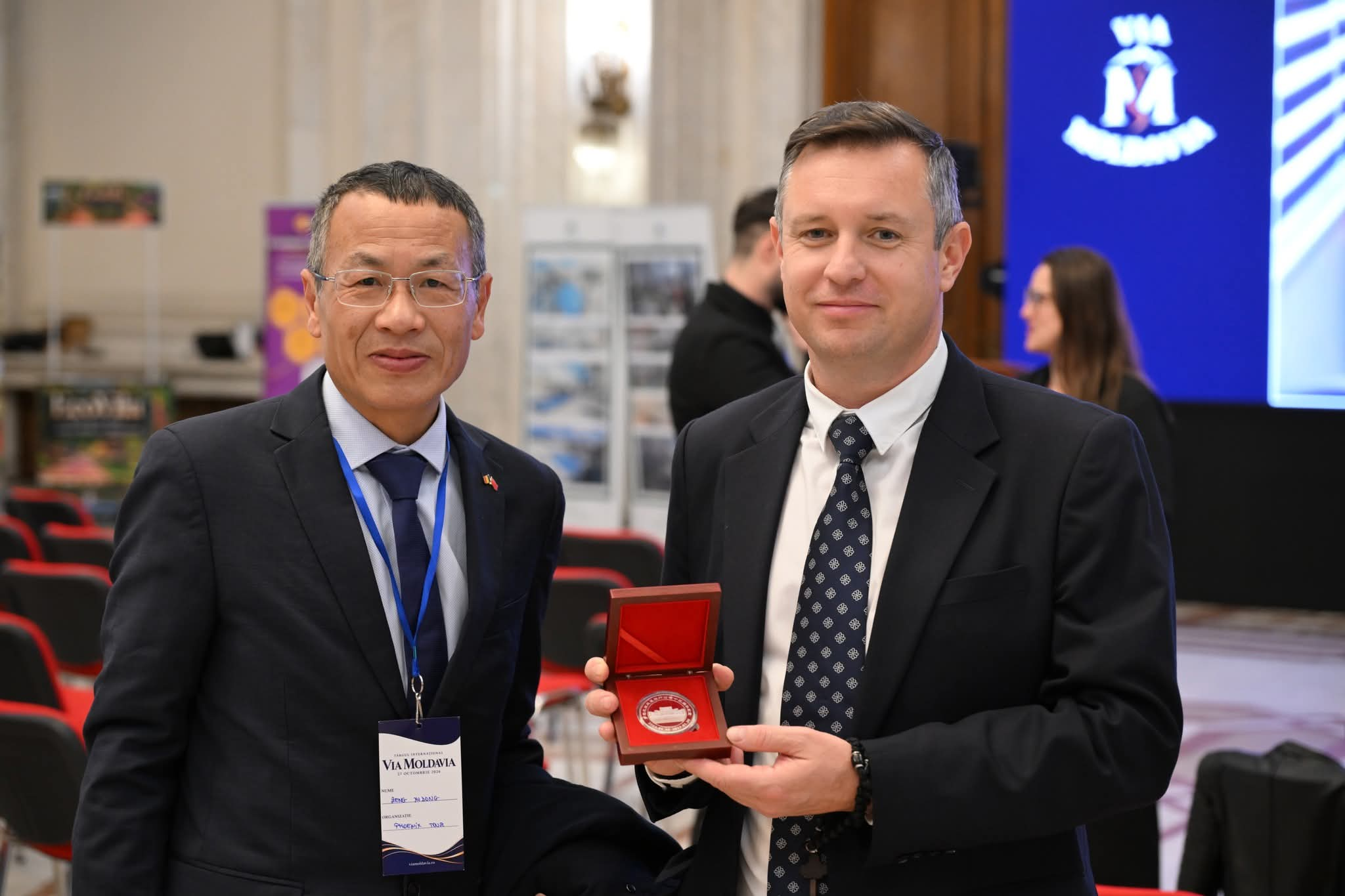

Held in the Council Chamber of the Gura Humorului City Hall, the meeting highlighted a territory bringing together Gura Humorului, Mănăstirea Humorului, Frasin, Păltinoasa and the area corresponding to the micro-destination, within an approach designed to emphasize the complementarity of the area’s tourism resources.
The Ariniș Micro-Destination and Gura Humorului Ski Area, coded RN-07 in the official VIA MOLDAVIA – Northern Route calendar, is part of a series of meetings through which the program seeks to build a regional tourism network based on the resources and stakeholders in the territory. The official calendar establishes September 10, 2026 as the date for this micro-destination and identifies the indicative area as Gura Humorului – Mănăstirea Humorului – Frasin – Păltinoasa.

EVENT PARTICIPANTS:
- Ion ȘTEFANOVICI, President, C.A.P.D.R.
- Marius URSACIUC, Mayor, Gura Humorului City Hall
- Ștefan GHIȘOVAN, Representative, Sentir Hotel
- Ramona FLOREA, Administrator, La Roată Complex in Gura Humorului
- Raluca CHIRAP, SC AGREMENT KIRALIDA SRL
- Ionela GHIȘOVAN, Tourism Representative, Gura Humorului City Hall
- Petru MOȚAC, shareholder and administrator, Anchor Restaurant & Grill, Burla Commune
- Marius ZUP, Administrator, Pyramia Guesthouse
- Ilie NIȚAN, Mayor, Ilișești Commune City Hall
- Robert GALAVAN, Bukovina Museum of Folk Customs
- Aura Adina BUZILĂ, Forestry Engineer, Suceava Forestry Directorate
- Tudor POPESCU, Vila Flora

VIA MOLDAVIA · Ariniș – Gura Humorului Micro-Destination
Gura Humorului is taking responsibility for building an integrated tourism micro-destination together with the surrounding localities and private sector
The Mayor of Gura Humorului, Marius URSACIUC, expressed the local administration’s openness to joining the VIA MOLDAVIA program and, at the same time, extended an invitation to HoReCa operators and the entire local private sector to participate in building and accurately mapping the tourism opportunities available in Gura Humorului and its area of influence.
In his intervention, the mayor emphasized that the strength of a tourism destination increases when the administration, entrepreneurs and surrounding communities work together:
“Gura Humorului City Hall is open to joining the VIA MOLDAVIA program, and we invite HoReCa representatives and private operators to join us in carrying out a very accurate mapping of the opportunities available at municipal level. At the same time, we expect the localities within a 20-kilometer radius of Gura Humorului, together with the private sector in these communities, to join us. Integrated into a single micro-destination, we can become a stronger force within the VIA MOLDAVIA program and, more broadly, within national tourism.”
This approach reflects precisely the logic behind the Ariniș – Gura Humorului micro-destination: the municipality constitutes the core, while, within a concentric radius of 20 kilometers, localities, tourist attractions, accommodation and food-service facilities, cultural and religious heritage, leisure activities, local producers and other services that can collectively form a coherent tourism offer are brought together.
Thus, the discussion in Gura Humorului starts from a very clear premise: a destination becomes stronger when it knows its resources, maps them, connects them and promotes them together.
From here, we can continue the coverage by presenting who participated in the meeting, the main interventions, Ariniș and the ski area, the heritage within the 20-kilometer radius, HoReCa, the issues identified and the next steps.

Building an integrated tourism product and developing a loyalty card for the micro-destination
Another important point discussed during the meeting was raised by Ramona FLOREA, representative of the La Roată Complex in Gura Humorului, who emphasized the need to develop a well-structured tourism package for the entire micro-destination.
In her view, Gura Humorului needs a unified, professional presentation in which tourist attractions are correlated with accommodation facilities, local gastronomy, and leisure and sports activities, allowing tourists to find a complete destination experience within a single product.
At the same time, Ramona Florea proposed developing, within VIA MOLDAVIA, a loyalty card concept dedicated to tourists, customized in relation to accommodation facilities, restaurants, leisure facilities, sports activities and other attractions in Gura Humorului and the micro-destination.
Such an instrument could encourage tourists to stay longer in the area, access more services and discover a more diverse offer, while also contributing to strengthening cooperation among local operators.
The proposal directly reflects the VIA MOLDAVIA philosophy: transforming a concentration of attractions and services into an integrated, coherent tourism product that is easy for visitors to access.

Leisure and sports – developing active experiences for children, families and tourists
The leisure and sports component of the micro-destination was represented by Raluca CHIRAP, who organizes several activities in Ariniș Park, particularly for children and families: zip-lining, a shooting range, and sports and recreational activities adapted to different age groups.
Raluca CHIRAP emphasized that the development of the micro-destination must give an important role to sports-based leisure, both within Ariniș Park and in other areas of Gura Humorului. In her view, any initiative that diversifies opportunities for active leisure and creates additional reasons for tourists to stay in the destination deserves to be supported and integrated into a joint offer.
At the same time, she expressed her openness to expanding her own activities, depending on the development of demand and their integration into the micro-destination’s tourism circuit. The objective is for tourists arriving in Gura Humorului to find, alongside accommodation, gastronomy and heritage, an increasingly rich range of sports, adventure and leisure experiences aimed at children, families and active visitors alike.
The intervention complements very well the concept outlined during the meeting: Ariniș can become one of the micro-destination’s leisure hubs, and by connecting existing activities with new services and sports experiences, Gura Humorului can strengthen its profile as an active destination, attractive throughout the entire year.

Local administration involvement and extending the tourism season through a joint events calendar
An important role in shaping the discussions and connecting the program with local realities was played by Ionela GHIȘOVAN, the representative of Gura Humorului City Hall for tourism. Her involvement was evident both during the meeting, through her contributions to the working discussions, and subsequently in the field, through her willingness to support the mapping and development of the micro-destination’s tourism components.
Ionela GHIȘOVAN noted that the number of participants at the meeting should also be viewed in the context of the period, as several local operators were away or unavailable, but she conveyed that there is openness within the local tourism community to becoming involved in VIA MOLDAVIA. Looking ahead to the next stages, this willingness can be transformed into concrete participation, both by integrating operators into the program and by developing new initiatives and events.
Particular attention was given to extending the tourism season, especially through activities and events organized in spring and autumn, so that Gura Humorului can generate reasons to visit outside the traditional peak periods.
In this context, CAPDR President Ion ȘTEFANOVICI proposed creating, together with the local administration and private sector, a joint calendar of events for Gura Humorului and the entire micro-destination.
Among the ideas discussed was also the possibility that the Moldova Regional Economic Forum, previously organized in Vatra Dornei, could in the future be relocated to Gura Humorului, provided the necessary logistical, institutional and participation conditions are met.
This direction would strengthen the local profile through an additional component of event tourism, professional meetings and regional economic cooperation, alongside leisure, sports, heritage, gastronomy and hospitality.

Cooperation between micro-destinations and promoting Bukovina as a regional tourism product
One participant who brought the perspective of cooperation among Bukovina’s micro-destinations into the discussion was Petru MOȚAC, shareholder and administrator of Anchor Restaurant & Grill, Burla Commune, an entrepreneur with experience gained in the United Kingdom who returned home to develop projects in Bukovina.
Although, due to his geographical location, his activity primarily falls within the RN-05 · Land of Monasteries micro-destination, Petru MOȚAC chose to participate in the Gura Humorului meeting precisely to better understand the VIA MOLDAVIA mechanism, how a micro-destination can organize its offer and, above all, how public administration, HoReCa, leisure providers and other private operators can jointly build a coherent tourism product.
He expressed his desire to join the program and become actively involved in the stage dedicated to the Land of Monasteries, whose meeting is scheduled for September 28, in Sucevița. Within VIA MOLDAVIA, the micro-destination has a profile focused on religious tourism, heritage and culture, while the concept seeks to connect monasteries, heritage, communities and tourism services into a common offer.
Petru MOȚAC also emphasized a broader perspective: micro-destinations must grow individually, but they must also communicate and support one another under the Bukovina tourism product. The experience accumulated in Gura Humorului – where the local administration, HoReCa operators and leisure providers have managed to create a relevant critical mass for tourism – can provide a useful model for other areas of the county as well.
At the same time, he expressed his willingness to contribute to promoting Bukovina in the United Kingdom, as well as through the other relationships and tools available to him, so that the regional tourism product can benefit from stronger international reach.
His intervention complements one of the central ideas of the Gura Humorului meeting:
VIA MOLDAVIA builds distinct micro-destinations, but their value increases when they become parts of a strong regional destination – Bukovina and, further, the Moldova Region.

Local entrepreneurship and diversifying the tourism offer through authentic experiences
Another participant at the meeting was Marius ZUP, representative of Pyramia Guesthouse, a local operator providing accommodation facilities and featuring, as a distinctive element, a saltwater swimming pool, also valued for its therapeutic qualities.
Marius ZUP represents a category of smaller local entrepreneurs who are nevertheless essential to the diversity and authenticity of a tourism destination. Initiatives of this kind complement the offer of larger accommodation facilities and contribute to creating a varied tourism experience closely connected to the specific character of the area.
He expressed his openness to joining VIA MOLDAVIA and contributing, through his own resources, dynamism and direct involvement, to the development of the program and the micro-destination.
In his intervention, he emphasized that Gura Humorului deserves such a joint effort, because what can be seen today in the resort is the result of a process built over time by the local administration together with numerous entrepreneurs who have invested, developed services and contributed to strengthening the city’s tourism profile.
His message was very clear: there is a willingness to cooperate, to associate around a common tourism product and to support, through all the means available to each operator, the development of the Ariniș – Gura Humorului micro-destination.
In this context, VIA MOLDAVIA must provide visibility to local entrepreneurs who, through investments that may be smaller in scale, bring special services, distinctive experiences and authenticity. The strength of a micro-destination is built precisely through this complementarity: public administration, major operators, guesthouses, gastronomy, leisure, sports and local entrepreneurial initiatives brought together within a single tourism offer.

Quality tourism infrastructure and the need to connect private investments
Next, Ștefan GHIȘOVAN, representative of Sentir Hotel, provided participants with a concrete overview of the accommodation standards and infrastructure available in the vicinity of Ariniș Park.
During the visit, he presented the rooms of Sentier Guesthouse, the event hall and the Vento accommodation facilities, investments carried out to high standards, with attention to service quality, tourist comfort and integration into the area’s leisure offer. Their location in the immediate vicinity of Ariniș Park represents an important advantage, facilitating the connection between accommodation and sports and leisure activities, as well as the other experiences Gura Humorului can offer visitors.
Ștefan GHIȘOVAN also expressed his openness to supporting and integrating the initiative into the VIA MOLDAVIA program, appreciating that such a construction is necessary not only for Gura Humorului or Suceava County, but for a broader regional area.
In his view, both Suceava and Botoșani, and the Moldova Region as a whole, need a common mechanism for promoting, networking and showcasing the existing tourism infrastructure. Quality private investments need to be connected with one another and integrated with local attractions, events and services, so that tourists can perceive the region as a coherent and competitive product.
The presence of facilities such as Sentier and Vento also confirms one of the important conclusions of the meeting: the Ariniș – Gura Humorului micro-destination already has accommodation capacities and services meeting high standards, while the next stage is to connect them within a common system of promotion, tourism offerings and experiences through VIA MOLDAVIA.
Quality already exists in the territory. The challenge is to connect it, make it visible and transform it into a strong regional product.

Local gastronomy – a resource for developing an authentic tourism experience
Ilie NIȚAN, Mayor of Ilișești Commune, brought up a situation different from those of the other localities represented at the meeting: the commune currently has no accommodation facilities, but it has local resources that can be transformed into an authentic tourism experience.
The mayor spoke about two women from Ilișești who are known for the dishes they prepare, and this led to one of the meeting’s most concrete proposals. CAPDR President Ion ȘTEFANOVICI proposed supporting the community in developing a local gastronomic point based on traditional cuisine and products specific to the area, while following the necessary steps for its operation within the legal framework and for connecting it with relevant structures, including the National Mountain Area Agency – ANZM.
The commune’s position as a transit locality can become an advantage in this context. Tourists traveling through the area can be given a concrete reason to stop, discover local gastronomy and, through it, come into contact with the community and the area’s specific character.
The proposal expresses one of the important ideas of the VIA MOLDAVIA program: each locality can contribute to the tourism product through what it has that is authentic and valuable. Where accommodation exists, it should be integrated; where leisure activities exist, they should be promoted; and where gastronomy is the strong point, it can become an attraction in itself.
CAPDR expressed its willingness to support the administration of Ilișești in shaping this initiative and connecting it to the micro-destination’s tourism circuit.
Because sometimes a destination begins with a tourist attraction. At other times, it simply begins with a good meal prepared for a hungry traveler.

Cultural heritage and local traditions – essential elements of the tourism experience
Next, Robert GALAVAN, representative of the Bukovina Museum of Folk Customs, expressed his support for the development direction proposed through the VIA MOLDAVIA program.
He emphasized that the museum is actively involved in diversifying Gura Humorului’s cultural offer through initiatives and activities designed to complement the tourist experience and better showcase the area’s heritage, traditions and local identity.
Robert GALAVAN stated that the Bukovina Museum of Folk Customs is open to cooperation and integration into a broader tourism circuit, so that the city’s cultural offer can be relevant to local, regional, national and international tourism.
This cultural component naturally complements the profile of the micro-destination: Gura Humorului must offer tourists not only accommodation, leisure and gastronomy, but also access to heritage, traditions and cultural experiences that provide the place with its identity.
Through the involvement of the museum, VIA MOLDAVIA strengthens, within this micro-destination, the link between tourism, culture, tradition and the promotion of Bukovina as an integrated regional product.

Natural heritage and the responsible use of forest resources
Aura Adina BUZILĂ, representative of the Suceava Forestry Directorate, an institution that has been a traditional partner of CAPDR in regional development initiatives in recent years.
In her intervention, she highlighted the willingness and interest of the National Forest Administration – Romsilva, through the Suceava Forestry Directorate, to support the development of tourism components that responsibly capitalize on the county’s natural heritage.
Aura Adina BUZILĂ emphasized the role that the Suceava Forestry Directorate can play both in hunting tourism and in the development of recreational tourism, nature-based activities and forms of tourism associated with forest resources and the mountain landscape.
This contribution is important for the micro-destination because it adds an essential component to accommodation, gastronomy, leisure and culture: the relationship with nature and the forest resources of Bukovina.
The Suceava Forestry Directorate can thus become a relevant partner in shaping integrated tourism experiences built around forests, trails, recreation, environmental education and activities specific to hunting grounds, all coherently connected with the micro-destination’s overall offer.
Its presence at the meeting confirms once again that VIA MOLDAVIA is not built solely through tourism operators, but through cooperation among the administration, private sector, cultural institutions and structures responsible for managing the region’s natural heritage.

A micro-destination built by connecting local resources
The meeting had an applied character, in line with the general VIA MOLDAVIA methodology, which seeks to transform existing resources into a structured, verifiable and regionally connected tourism offer.
Within the program’s architecture, the micro-destination represents the level at which the local offer is identified and built, while the route ensures regional connectivity, the network enables validation, and the VIA MOLDAVIA application facilitates the transformation of this offer into an accessible and easy-to-use tourism experience.
This logic also formed the basis of the Gura Humorului meeting, where the territory’s tourism components were approached from the perspective of their potential integration into a common offer.

Mapping the tourism offer
A central element of the meeting was the mapping of the micro-destination, starting from a central point and a standard radius of 20 kilometers.
The mapping process aims to identify the six components of the tourism offer: accommodation, gastronomy, attractions, events, experiences and services. These form the basis for creating an operational picture of the territory and can subsequently be integrated into routes and tourism products.
In the case of the Ariniș Micro-Destination and Gura Humorului Ski Area, this approach enables tourism resources to be analyzed from the perspective of their complementarity and the way in which they can contribute to a more complex experience for visitors.
Mapping also involves collecting and verifying concrete information regarding location, access, distances and travel time, schedule and availability, capacity, contact details, content and the possibility of integration into routes.

From attractions to tourism experiences
VIA MOLDAVIA proposes an approach that goes beyond simply inventorying tourist attractions. Resources are analyzed from the perspective of how they can be brought together into concrete tourism experiences and products.
The perspective is tourist-centered: the starting and ending point, available time, budget, preferences, mode of transportation and the possibility of continuing the journey to another micro-destination.
In this logic, the micro-destination’s offer can be structured as experiences lasting several hours or one day, 2–3-day products, or regional circuits connecting several micro-destinations.
For the Gura Humorului – Mănăstirea Humorului – Frasin – Păltinoasa territory, this perspective highlights the need to view local resources together and identify the links between them.

Connecting the micro-destination to the Northern Route
Another important objective of the VIA MOLDAVIA meetings is to connect the micro-destinations with one another.
The micro-destination is not treated as an isolated entity, but is analyzed in relation to entry and exit points, the main routes of the Northern Route, secondary connections and possibilities for extending the tourist’s journey. The program’s methodology also seeks to identify 2–7-day inter-micro-destination circuits and connections with the Central Route, Southern Route and, subsequently, with the Romania–Republic of Moldova cross-border component.
In this context, Ariniș and Gura Humorului Ski Area is integrated into a network in which each territory develops its own offer while simultaneously contributing to the development of regional tourism circuits.

A process from selection to market
The development of tourism products within VIA MOLDAVIA follows a clear sequence: SELECT → VALIDATE → BUILD → TEST → SELL.
For each product, elements such as the route, included services, capacity, period, indicative price, target audience and sales channel are considered.
This methodology allows the information collected during the meetings to subsequently go through the stages of profiling, validation, translation, publication and updating in the VIA MOLDAVIA back office.
Therefore, the Gura Humorului meeting was part of a process aimed at bringing the tourism offer in the territory to a stage where it can be structured, promoted and connected to the market.
Preparing the offer for the VIA MOLDAVIA International Tourism Fair
An important milestone for the entire process is the VIA MOLDAVIA International Tourism Fair, scheduled for October 26–28, 2026, at the Palace of Parliament in Bucharest.
The meetings held in the territory represent the offer-building stage, while the fair will provide a framework for presenting products and destinations, B2B networking and identifying opportunities for cooperation and contracting.
In this regard, the mapping and structuring process for the Ariniș Micro-Destination and Gura Humorului Ski Area contributes to preparing an offer that can be presented within the VIA MOLDAVIA network and to partners in the tourism industry.

VIA MOLDAVIA continues in the territory: a calendar dedicated to building the micro-destinations of the Northern Route
The meeting dedicated to Ariniș and the Gura Humorului Ski Area is part of a broader calendar of working meetings through which VIA MOLDAVIA is gradually building the network of tourism micro-destinations in the northern part of the region. Following the meetings dedicated to the Târgu Neamț and Bicaz micro-destinations, the process will continue in several territories, with each meeting focused on identifying local resources, mapping them, defining connections and transforming them into integrated tourism products. The program’s official calendar establishes a sequence of meetings that will allow the territory to be approached as a network rather than as a collection of independent destinations.
VIA MOLDAVIA Meetings Calendar – Northern Route:

The first meeting in this series took place in Târgu Neamț on September 1, 2026, dedicated to the RN-02 – Târgu Neamț – Neamț Fortress, monasteries and the Zimbrilor Land micro-destination. The meeting focused on identifying tourism resources and building an experience connecting heritage, spirituality, nature and local hospitality.
On September 3, 2026, the process continued in Bicaz, for micro-destination RN-01, with an emphasis on nature, landscape, leisure and local experiences. The territory analyzed brings together Bicaz, Bicazu-Ardelean, Bicaz-Chei, Tarcău, Ceahlău, Hangu, Grințieș and Durău. The meeting emphasized the need to connect resources and transform them into tourism experiences and products.
On September 8, 2026, at the Panoramic Slănic Moldova Complex, CAPDR organized a new VIA MOLDAVIA Working Meeting dedicated to the Trotuș Valley Micro-Destination – spa tourism, nature, heritage and leisure, as part of the process of identifying, connecting and capitalizing on local tourism resources through integrated products and experiences.
On September 14, attention will turn to RN-06 – Suceava Fortress – Suceava Municipality, with the meeting scheduled to take place at the Suceava County Council. For this micro-destination, the working area will focus on Suceava Municipality and the points of interest within the surrounding territory.

On September 18, VIA MOLDAVIA will reach RN-12 – Bistrița Valley, with the meeting scheduled at Farcașa City Hall. The micro-destination will include, within its indicative area, the localities of Poiana Teiului, Farcașa, Borca and Broșteni, together with the surrounding territory.

On September 21, the series of meetings will continue with RN-13 – Talienilor Road, in a special setting at the Suceava Forestry Directorate Cabin. The indicative territorial area will include Mălini, Berchișești, Moara, Brăiești, Cornu Luncii, Slatina, Valea Moldovei and Găinești.

On September 25, the meetings will continue with RN-08 – TransRarău and the ski area, at the Council Chamber of Vama City Hall. Câmpulung Moldovenesc, Vama, Prisaca Dornei, Bistrița Valley, Stulpicani and Ostra will be part of the indicative territorial area analyzed within this micro-destination.

On September 28, VIA MOLDAVIA will dedicate a new meeting to RN-05 – Land of Monasteries, to be held at Sucevița City Hall. The micro-destination will bring together Sucevița, Voroneț, Dragomirna, Putna and the associated monastic area, in an approach focused on integrating heritage into a regional tourism circuit.

On October 2, the series will continue with RN-04 – Dornelor Basin, with the meeting to be hosted by Șaru Dornei City Hall. The indicative area of this micro-destination includes Șaru Dornei, Dorna Arini, Panaci, Dorna Candrenilor, Vatra Dornei and Poiana Stampei.

On October 6, the program will have a stage dedicated to RN-14 – Chișinău, Republic of Moldova. The meeting is scheduled at the Ministry of Economic Development and Digitalization in Chișinău and will have the Republic of Moldova as its indicative territorial area, strengthening the perspective of connecting the VIA MOLDAVIA network with the Romania–Republic of Moldova cross-border component.

On October 9, the calendar provides for the meeting dedicated to RN-10 – Cultural Botoșani – memorial houses and cultural heritage. The date has been established, while the location is to be confirmed. The micro-destination will have Suceava Municipality and the surrounding territory as its indicative area.
As part of the continuation of the calendar, the meeting dedicated to RN-11 – Iași – business tourism, city breaks and religious tourism will have a date to be confirmed. The micro-destination will have Iași Municipality and the surrounding territory as its indicative area.
Also with a date pending confirmation is the meeting for RN-15 – Red Lake, with the indicative territorial area of Red Lake / Harghita. This will complete the series of micro-destinations included in the VIA MOLDAVIA calendar.

A tourism network built from the territory
Through the VIA MOLDAVIA meetings, CAPDR continues a tourism development process based on identifying local resources, connecting stakeholders and integrating territories into a regional network.
The meeting dedicated to the Ariniș Micro-Destination and Gura Humorului Ski Area thus represented a new stage in this construction, emphasizing the transformation of local resources into a coherent and connected offer.
The ultimate objective is for each micro-destination to have a working map, a register of tourism resources, routes and regional connections, initial tourism products and an offer prepared for validation, promotion and B2B networking.
In this context, Ariniș and Gura Humorului Ski Area becomes a component of a broader regional tourism development, in which each territory’s identity is preserved but enhanced through connections with other micro-destinations.
Micro-destinations are built locally, connected regionally, validated through the network and transformed into tourism experiences through VIA MOLDAVIA.