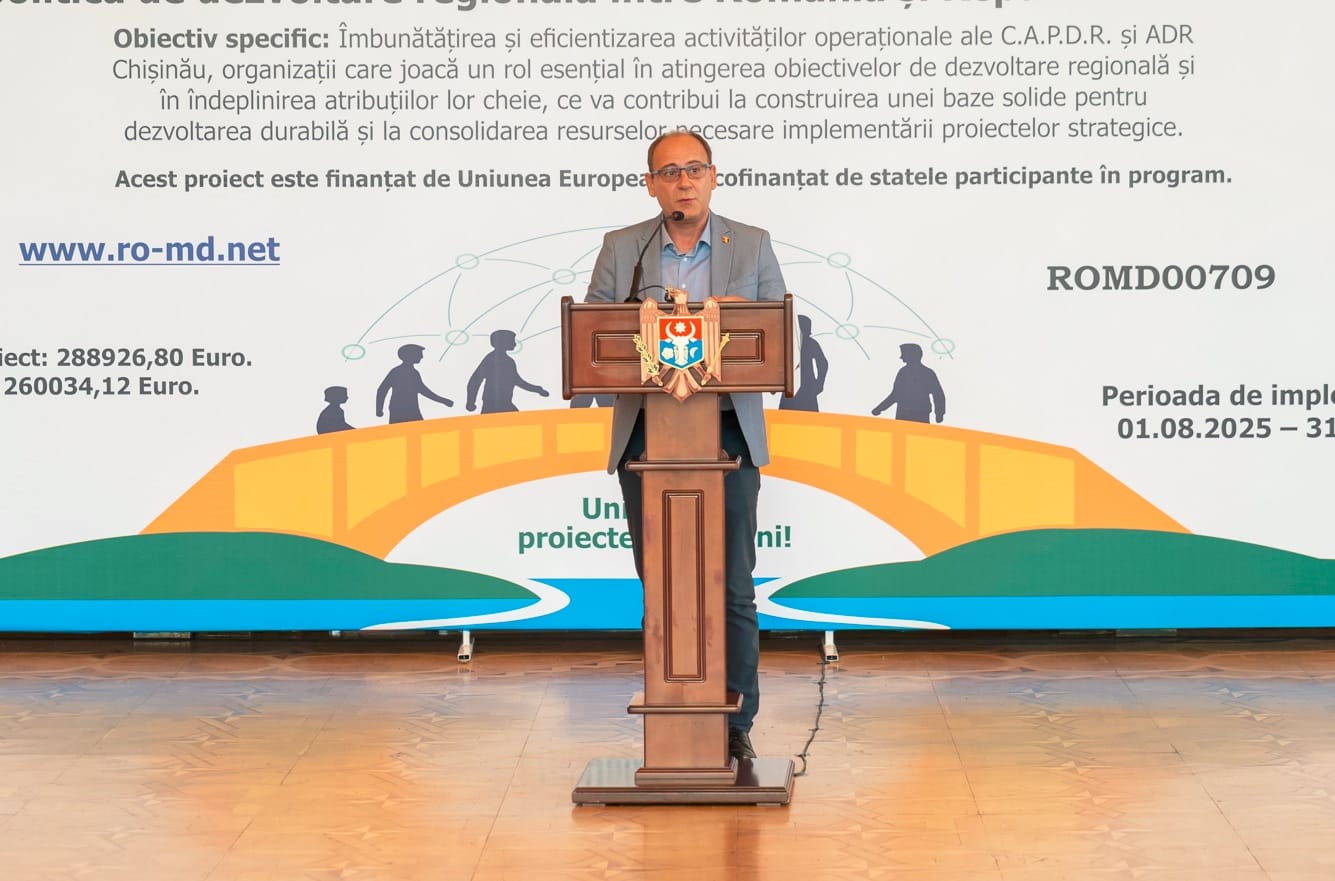
Message of manager Gabriel AMINORESEI (HORECA) at the launch event of the Interreg project | CAPDR🇷🇴 – ADR Chișinău🇲🇩 at the Palace of the Republic in Chișinău, 11.09.2025

Mesaje publice
Thursday, September 11, 2025 – At the Palace of the Republic in Chișinău took place the launch conference of the project “Transfer of Good Practices and strengthening administrative capacity in regional development policy between Romania and the Republic of Moldova”, funded through the Interreg NEXT Romania – Republic of Moldova Program.
The event, organized in partnership between the Center for Regional Development Analysis and Planning (CAPDR) and the Regional Development Agency of Chișinău Municipality (ADR Chișinău), brought together representatives of public administration, regional development experts, and decision-makers from both countries.
Speaker:
Gabriel AMINORESEI – EU Funds Specialist, HORECA 4.0 Manager; Romania
EU funds and the role of human resources
Gabriel Amironesei, EU Funds Specialist, opened his intervention by emphasizing the importance of human resources in implementing EU-funded projects.
“EU funds are both a challenge and a satisfaction. The human resource component is extremely important in accessing European funds and, especially, in implementation. If you don’t have a solid team, consolidated with knowledge and understanding of European mechanisms, you cannot achieve your indicators – and these are nothing else but people.”
Amironesei shared his professional experience, stressing that the success of projects depends on the team’s ability to transform knowledge into concrete results.
“When you share your knowledge and contribute to the development of those around you, the satisfaction is unique. Projects succeed when people grow, develop, and surpass the level you were at.”
Concrete example: HORECA 4.0 – Innovation Academy
A practical example of applying good practices and developing human resources is the project HORECA 4.0 – Innovation Academy, presented by Gabriel Amironesei.
“The project targets employees in the Horeca industry – hoteliers, guesthouses, restaurants – and includes digital capacity building courses. It is an ambitious project, involving over 600 people in the North-East region of Romania, in the counties of Suceava, Botoșani, Neamț, Iași, Vaslui, and Bacău.”
The purpose of the project is to increase the level of digitalization in the tourism sector and integrate training platforms that facilitate continuous professional development.
Support and regional perspectives
Ion Ștefanovici complemented the presentation, highlighting the project’s impact and the need to expand good practices.
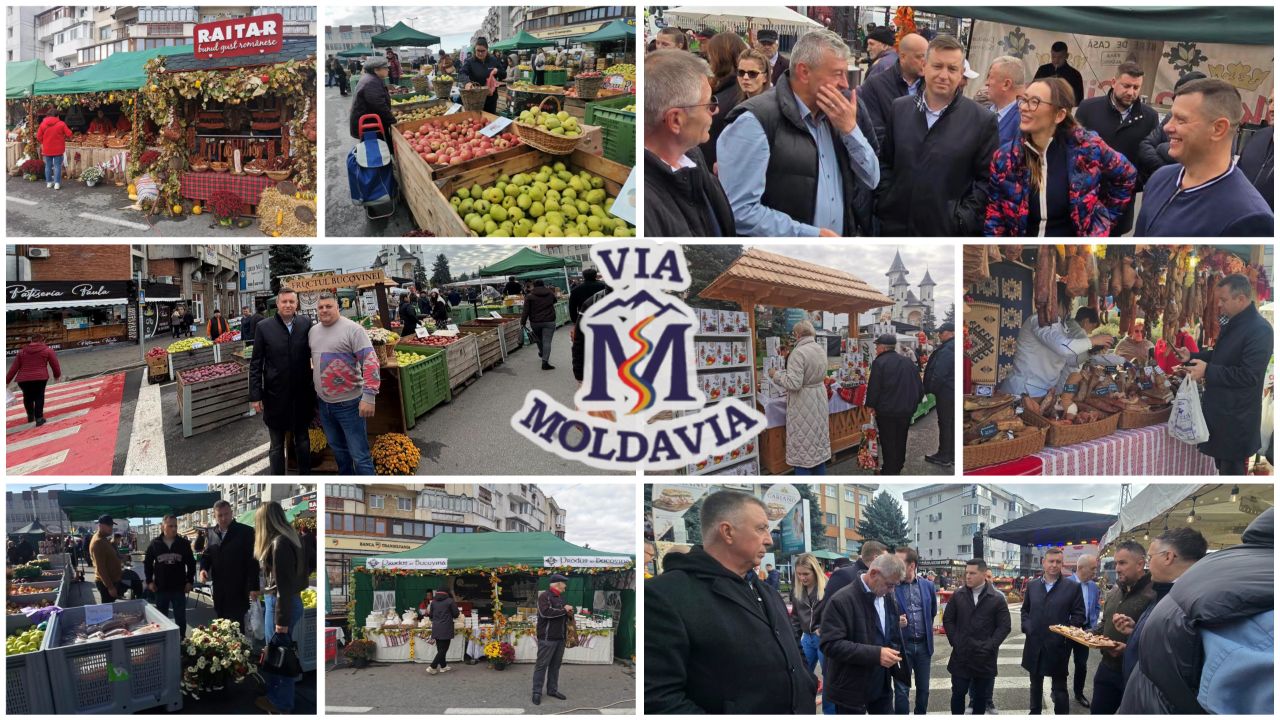
“The project that Mr. Gabriel Amironesei mentioned is worth 1 million euros and addresses the North-East region. I encourage its dissemination to all companies with CAEN codes 55 and 56, to facilitate their training periods. Thus, they will be integrated into regional strategies and future programs such as Via Moldavia.”
Ștefanovici emphasized the importance of cross-border cooperation.
“I encourage our colleagues from ADR Chișinău to identify common elements that can be applied in developing joint cultural and tourist routes.”

Conclusion
The meeting between ADR Chișinău and CAPDR represents an important step in strengthening cross-border cooperation between Romania and the Republic of Moldova in regional development. The event demonstrated that the success of EU-funded projects depends not only on financial resources but also on the preparation and involvement of the teams implementing them.
The expertise brought by Gabriel Amironesei highlighted the importance of human resources and knowledge exchange for achieving project objectives, while the intervention of Ion Ștefanovici showed how these projects can be integrated into regional strategies and disseminated to support local companies and communities.
The projects presented, such as HORECA 4.0 – Innovation Academy, demonstrate how professional training and digitalization can support strategic sectors such as tourism, contributing to economic development and creating opportunities for local communities. Through the active involvement of specialists like Amironesei and decision-makers like Ștefanovici, cross-border initiatives gain consistency and relevance, transforming accumulated experience into long-term applicable good practices.