Message of Natalia IEPURAȘ, Administrator of the Free Economic Zone “Ungheni-Business”, Republic of Moldova, at the launch event of the Interreg project CAPDR🇷🇴 – ADR Chișinău🇲🇩 at the Palace of the Republic in Chișinău | 11.09.2025

Mesaje publice
Thursday, September 11, 2025 – The launch conference of the project “Transfer of Best Practices and Strengthening Administrative Capacity in Regional Development Policy between Romania and the Republic of Moldova” took place at the Palace of the Republic in Chișinău, financed through the Interreg NEXT Romania – Republic of Moldova Programme.
The event, organized in partnership between the Center for Regional Development Analysis and Planning (CAPDR) and the Regional Development Agency of the Municipality of Chișinău (ADR Chișinău), brought together representatives of public administration, regional development experts, and decision-makers from both countries.
Speaker – Natalia IEPURAȘ – Administrator of the Free Economic Zone “Ungheni-Business”, Ungheni, Republic of Moldova

The Experience of the FEZ “Ungheni-Business”
Natalia Iepuraș, Administrator of the Free Economic Zone “Ungheni-Business”, emphasized the essential role of cooperation between the private sector and public authorities in implementing development projects and accessing European funds.
“We have a lot to learn from your experience and from that of all local public authorities, as we are following in your footsteps. We do not have the right to make mistakes, only to learn, succeed, and develop.”
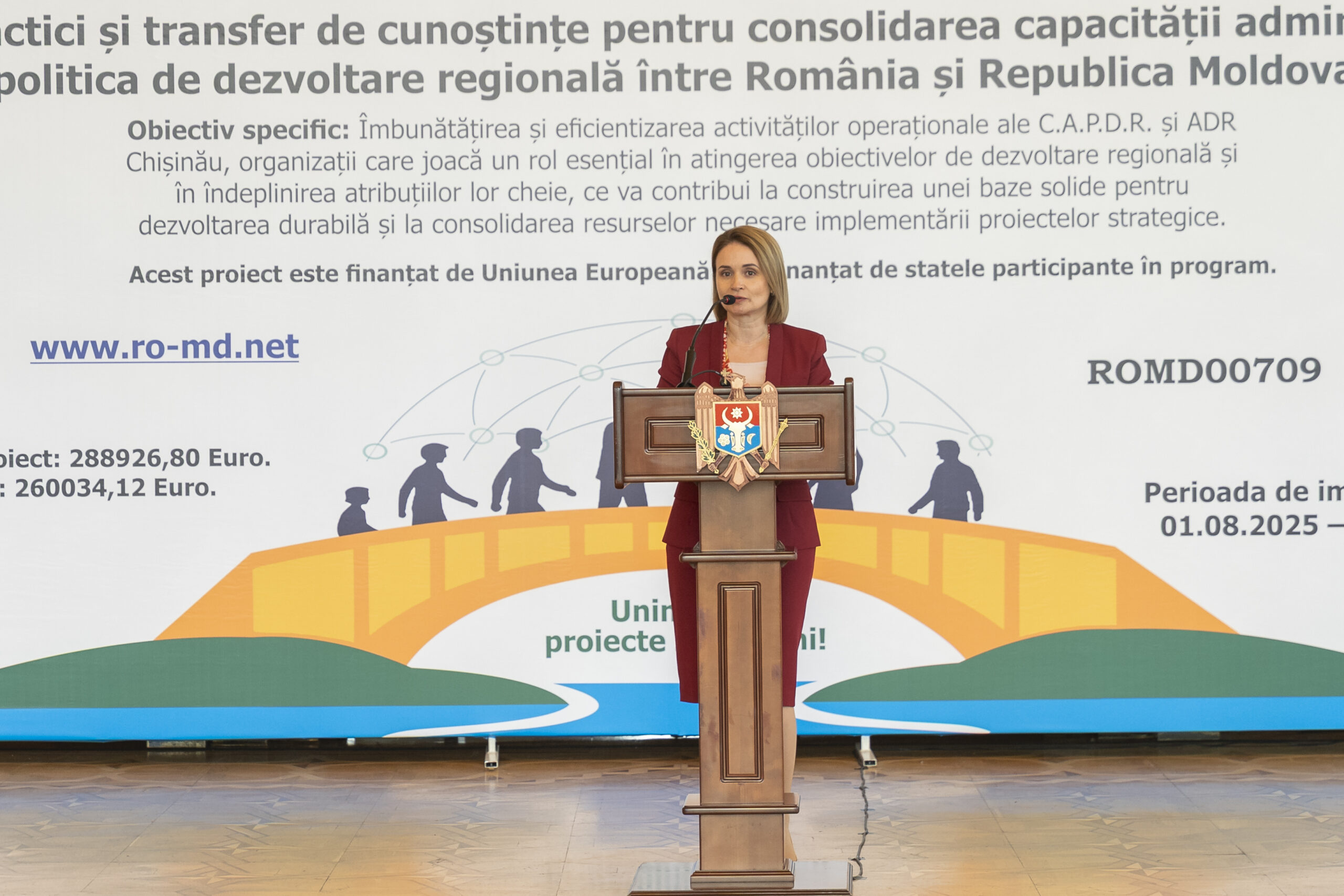
During her intervention, Ms. Natalia Iepuraș presented concrete examples of best practices implemented in the economic zones managed by the FEZ “Ungheni-Business”:
-
Infrastructure of the industrial sector in the municipality of Ungheni: A project implemented together with the District Council and Retrans, consisting of the modernization of a road crossing the industrial sector, facilitating access and the proper functioning of the economic zone;
-
Subzones in Soroca: In collaboration with Soroca City Hall and with the support of the Ministry of Infrastructure and Regional Development, technical-utility networks were built, including gas, water and sewerage systems, access roads, and electrical networks up to the boundary of the economic zone.
“This highlights the effective collaboration between local public authorities and development agencies. The region—whether central, northern, or southern—does not matter; what is important is that these partnerships continue and generate concrete results.”

Conclusion
Natalia Iepuraș clearly demonstrated the importance of cross-border cooperation and the exchange of best practices in regional development. The experience of the FEZ “Ungheni-Business” highlights that the success of implementing economic and infrastructure projects depends on close cooperation between the private sector and local public authorities.

The projects carried out in Ungheni and Soroca illustrate the tangible impact of this collaboration through the development of industrial infrastructure, technical-utility networks, and the facilitation of access to European funds. These examples show that regional development is not determined by geographical location but by the quality of partnerships and institutional mechanisms.
Looking ahead, strengthening administrative capacity, creating a shared learning framework, and reinforcing partnerships between Romania and the Republic of Moldova are essential steps toward modernizing public policies and increasing regional economic competitiveness. In this context, continued collaboration between public authorities and the private sector represents the key to success and the guarantee of achieving sustainable results.