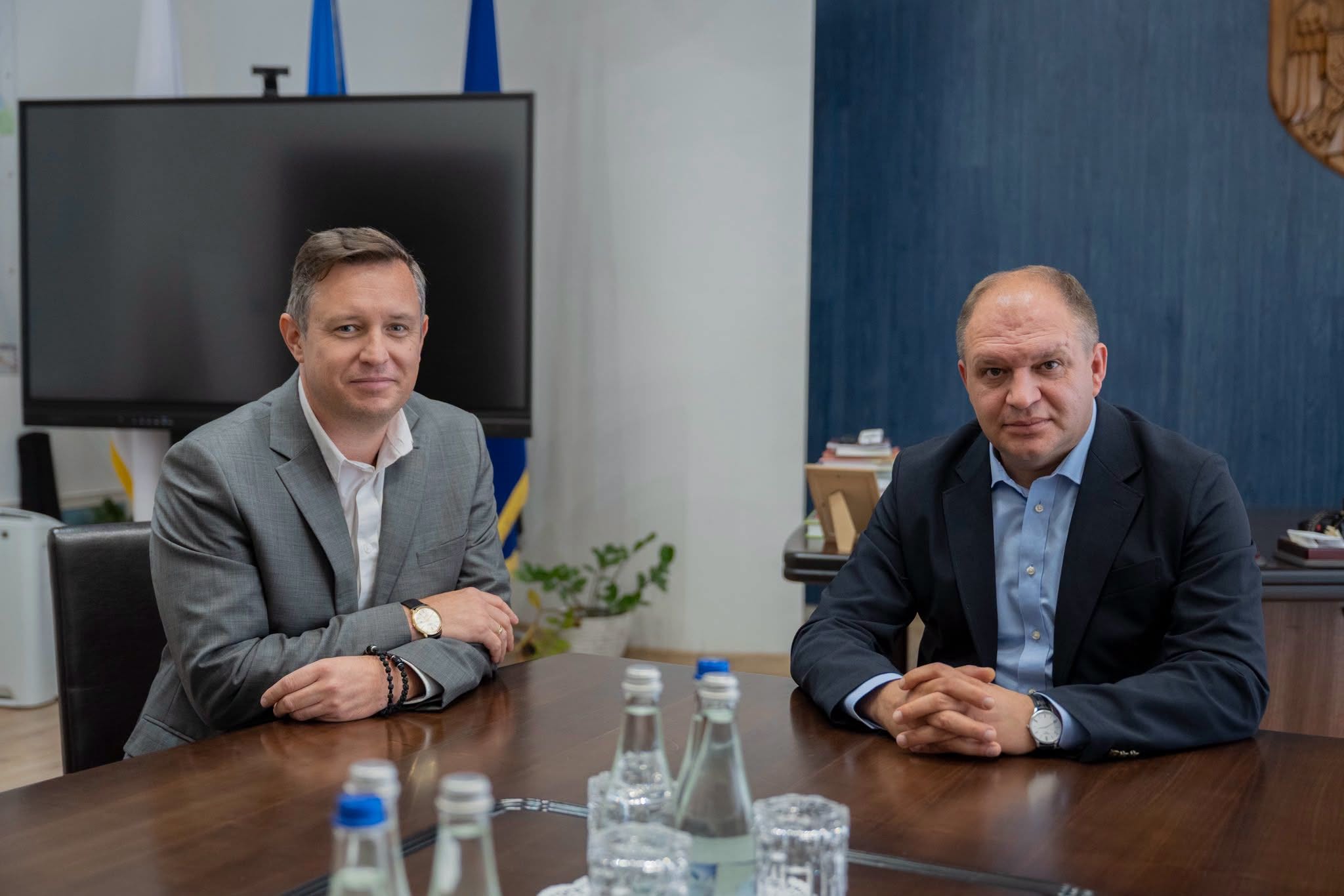
The Extended Moldova Region, Between Regional Cooperation and Strategic Investments | Debate between Ion ȘTEFANOVICI (CAPDR) and H.E. Victor CHIRILĂ, Ambassador of the Republic of Moldova to Romania, at FERM 2025

Mesaje publice
REGIONAL ECONOMIC FORUM MOLDOVA 2025
19th Edition – Vatra Dornei, July 9–13, 2025
Thematic Panel:
Strategic Investments in the Extended Moldova Region
Speakers:
Ion Ștefanovici – President of CAPDR / H.E. Mr. Victor Chirilă, Ambassador of the Republic of Moldova to Romania
Topic of the intervention:
“Positioning the Extended Moldova Region as a Strategic Destination for National and International Investments”
At the center of the discussions within Panel 1 of FERM 2025 – “Strategic Investments in the Extended Moldova Region” was the positioning of the region as a competitive destination for national and international investments, in the context of the MoldovaHUB initiative, a regional platform for collaboration, digitalization, and capital attraction.
Ion Ștefanovici, President of CAPDR, H.E. Victor Chirilă, Ambassador of the Republic of Moldova to Romania, and Ana Nedelcu, university lecturer and project management expert, offered in-depth perspectives regarding the opportunities and challenges of developing the Extended Moldova Region – a strategic construct that includes Northeastern Romania, the Republic of Moldova, and territories in Ukraine involved in cross-border cooperation.
“Collaboration, not theory.” How Ion Ștefanovici defines the Extended Moldova Region
Ion Ștefanovici outlined from the start the conceptual framework of the panel:
“We are not talking about interpretable theories, but about real collaboration between Northeastern Romania, the Republic of Moldova, and the Ukrainian areas that appear in cooperation documents. That is why I used the term Extended Region – it is a reality under construction, based on functional partnerships.”
He emphasized that infrastructure represents the backbone of economic development. Strategic road projects in Suceava County, such as the Panaci–Bilbor road, connections with Harghita, Neamț, or Botoșani counties, and proximity to the A7 Motorway are “corridors that shorten transport time, create vital links, and open the way to integrated development.”

However, Ion Ștefanovici draws attention to the fact that “there is no point in having infrastructure if we do not economically leverage it. You need to map the advantages and bring industrial parks, logistics centers, real investments around them.”
A concrete example is the Roman–Cordun area, where an industrial pole is taking shape, supported by the A7 and major investors such as Dedeman and ArcelorMittal. “There, the local administration understood the value of connectivity and moved strategically,” emphasized the CAPDR President.
H.E. Victor Chirilă: “Romania is our launch platform to Europe”
In a clear and pragmatic speech, Ambassador Victor Chirilă highlighted the intensification of economic relations between Romania and the Republic of Moldova:
“There are over 7,000 Moldovan companies registered in Romania, with an official turnover exceeding 3 billion euros. But in reality, this value is even higher,” stated Victor Chirilă.
According to the diplomat, Romania plays a dual strategic role: it is both a market and a logistics platform for Moldovan companies, as well as a channel through which Western investments reach the Republic of Moldova.

“Foreign investors first settle in Romania, then penetrate Moldova. It is an essential bridge for our economic development.”
However, Ambassador Victor Chirilă drew attention to critical obstacles, especially customs infrastructure:
“We lose time and money at the border. Customs facilities are outdated, built during the Soviet period for commercial flows of a different magnitude. The long-term solution is the integration of the Republic of Moldova into the European single market and, implicitly, the removal of customs control with Romania.”
Bridges, railways, and capital: ongoing strategic projects
The Ambassador reviewed a series of priority projects:
-
Ungheni Bridge – construction began in April 2025, estimated completion: end of 2026.
-
Modernization of customs points: Leușeni-Albița, Stânca-Costești, Bumbăta-Leova, Fălciu-Leca, Cahul-Oancea, Sculeni.
-
Utilization of Rădăuți-Prut for freight traffic.
-
Modernization of the Leușeni-Hâncești-Chișinău road and connection to the Poltava Motorway.
-
Electrified railway Iași–Ungheni–Chișinău, a key project for freight transport and protection of road infrastructure.
“We will have to move our transport to rail. Trade will increase, surpassing 5 billion euros. The current infrastructure will no longer cope. And Romania must invest in our electrical networks, especially in northern Moldova,” added Chirilă.
Ana Nedelcu: Collaboration between Southern Moldova and Northeastern Romania – from Tourism to Strategic Investments
Ana Nedelcu, project manager at Cahul City Hall, raised the issue of collaboration between regions in Southern Moldova and Northeastern Romania. The Ambassador’s response was clear:
“Everything starts with knowledge. Tourism and cultural activities create links, establish trust, and lay the foundation for economic partnerships. Cahul must come forward with initiatives: festivals, forums, projects.”

The “Via Moldavia” project and the challenge of EU fund distribution
Ion Ștefanovici returned with a warning regarding European funds allocated to the Republic of Moldova:
“We hope these funds go towards infrastructure. Unfortunately, there are signals that they are being directed towards public policies and human rights. These are important, but I’ve seen this story in Romania too – without infrastructure, you don’t build real development.”
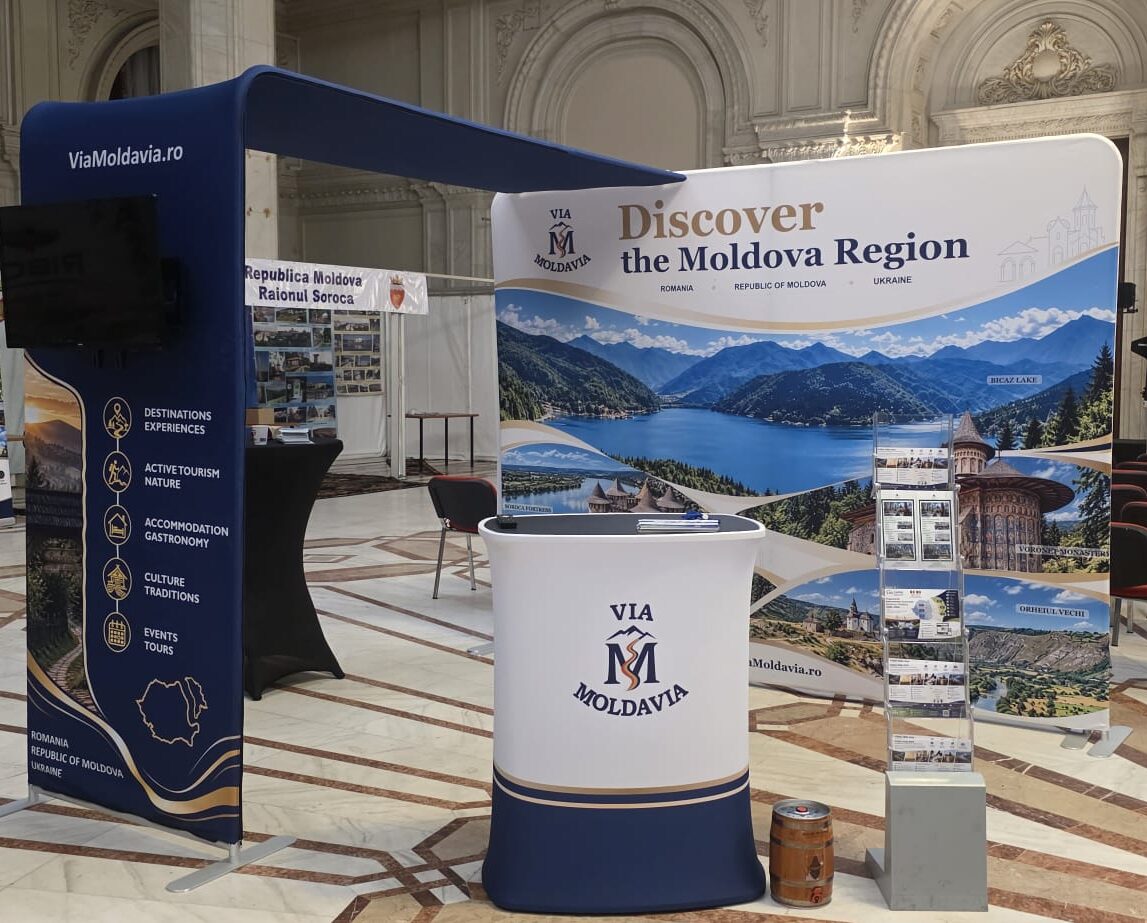
As an example of a cross-border project with impact, he presented “Via Moldavia”, a tourist route that starts from Vatra Dornei, crosses Moldova towards Bălți, reaches Soroca, and descends towards the Ukrainian coast.
“It is an integrated route that links tourism with the economy. We don’t need 100 projects. We need 2-3 solid, committed projects with real impact and concentrated resources.”

Conclusion: The Extended Moldova Region – Between Opportunity and Responsibility
The debate within Panel 1 of the Regional Economic Forum Moldova 2025 demonstrated that the Extended Moldova Region is a space with enormous potential, but which requires vision, coherence, smart investments, and functional partnerships. At a historic moment marked by accelerated European integration, this region can become a hub between Europe, Asia, and the ex-Soviet space, both through infrastructure and through people and capital.