Message from Mr. Sergiu BRÂNZĂ at the launch event of the Interreg CAPDR🇷🇴 – ADR Chișinău🇲🇩 project at the Palace of the Republic in Chișinău | 11.09.2025

Mesaje publice
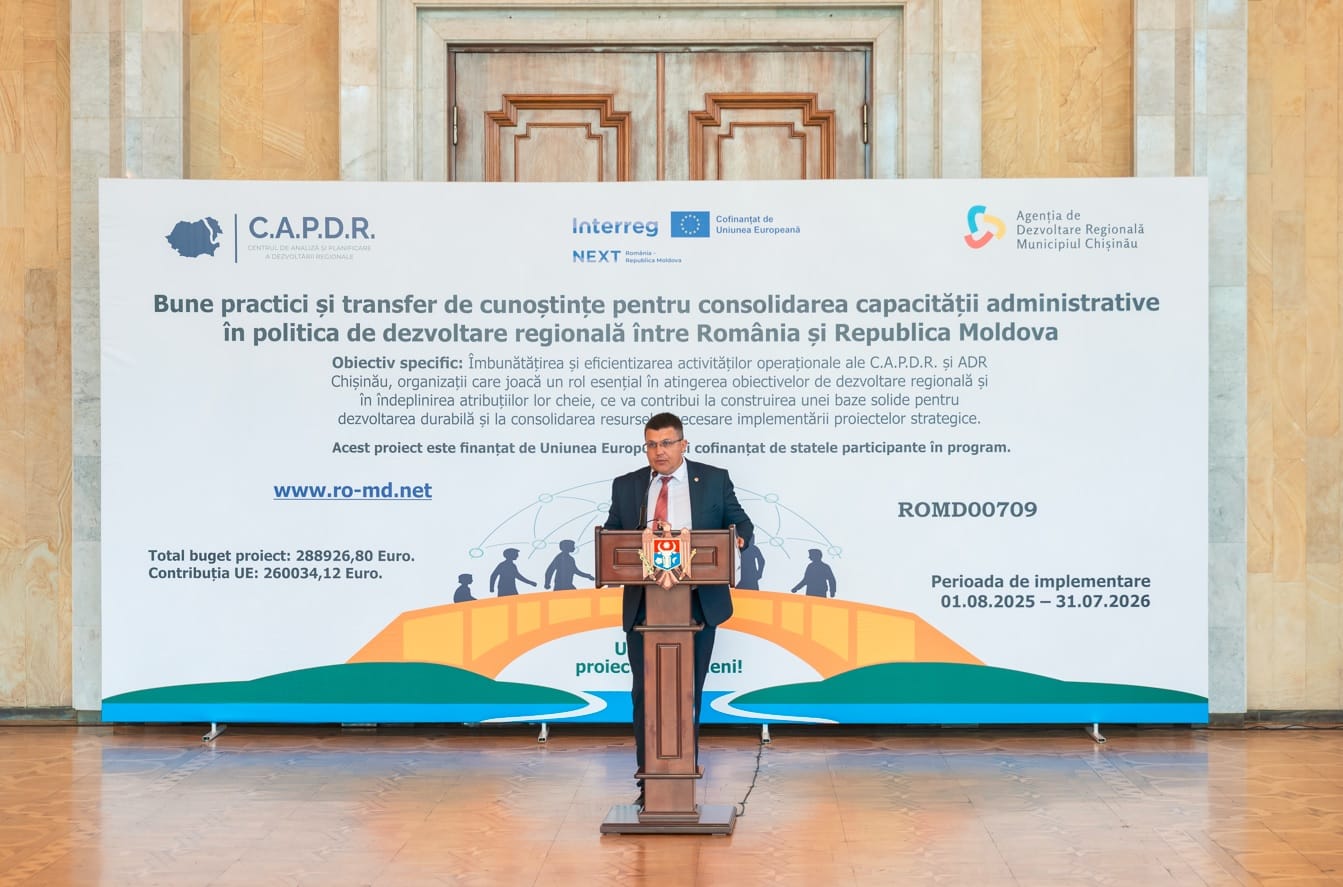
Thursday, September 11, 2025 – At the Palace of the Republic in Chișinău, the launch conference of the project “Transfer of Good Practices and Strengthening Administrative Capacity in Regional Development Policy between Romania and the Republic of Moldova” took place, funded through the Interreg NEXT Romania – Republic of Moldova Program.
The event, organized in partnership between the Center for Analysis and Planning of Regional Development (CAPDR) and the Regional Development Agency of Chișinău Municipality (ADR Chișinău), brought together representatives of public administration, regional development experts, and decision-makers from both countries.
Speaker:
Sergiu Brânză – Director of ADR Chișinău; Republic of Moldova
Project Importance for ADR Chișinău
Sergiu Brânză, Director of ADR Chișinău, emphasized that although the Agency was recently established, it needs to build its capacities to effectively utilize European funds allocated for regional development. The project is essential for training the involved institutions and for the efficient absorption of pre-accession funds.
“The Chișinău Regional Development Agency is an institution that was founded a few years ago and is at the beginning of this launched project. But, with the intention and desire to integrate into the European Union, we fully understand the need to develop our capacities to be able to absorb the funds coming from the European Union.”
Experience Exchange with Romania
The ADR Director explained that the project provides the opportunity to learn from Romania’s experience and to avoid repeating the same mistakes, thereby strengthening the capacities of both ADR Chișinău and the Center for Analysis and Planning of Regional Development in Iași.
“Several times I discussed with Mr. Ștefanovici how processes unfolded in Romania and the necessity to avoid following the same path, but rather to develop certain experiences and practices so that things run much more efficiently.”
Involvement of Municipalities and Community Impact
Brânză highlighted the role of municipalities in the Chișinău region, emphasizing that by strengthening their capacities, European funds can be utilized more efficiently, offering real solutions for community development.
“By strengthening the capacities of these institutions and municipalities, we will succeed, in the immediate future, in absorbing pre-accession and EU funds allocated to the Republic of Moldova, and in addressing upcoming challenges.”
Collaboration with Romanian Partners
The ADR Director expressed gratitude to colleagues in Romania for their support in implementing the project.
“I would like to thank my colleagues at Ceapătărie Iași for their professionalism and openness, which they demonstrated in implementing this project. I am confident that together we will turn opportunities into concrete results, increase institutional efficiency, and provide citizens with real solutions for effective development.”
Cross-Border Cooperation: Key to Success
The project launch provides an opportunity to strengthen relationships between regional development structures in Romania and the Republic of Moldova. Through the exchange of good practices and know-how, the project contributes to the modernization of regional policies and the improvement of citizens’ quality of life.

Conclusion
The launch of the project “Transfer of Good Practices and Strengthening Administrative Capacity” marks an important step in strengthening cross-border cooperation between Romania and the Republic of Moldova.
Sergiu Brânză, Director of ADR Chișinău, emphasized that by reinforcing the Agency’s capacities, involving municipalities, and exchanging experience with partners from Romania, the project creates a solid framework for the efficient utilization of European funds and the modernization of regional development policies.
According to Brânză, the initiative provides concrete opportunities to increase institutional efficiency and promote sustainable community development, delivering tangible benefits to citizens.