CAPDR organized the VIA MOLDAVIA working meeting dedicated to the TransRarău and ski area
Mesaje publice
The VIA MOLDAVIA – Northern Route Program continued the process of building and developing tourist micro-destinations through a new working meeting dedicated to the TransRarău micro-destination and ski area, held on 25 September 2026, in the Vama Town Hall Council Chamber, Suceava County

VIA MOLDAVIA | TransRarău – the beauty of Bucovina becomes part of a new regional tourism geography
From the Rarău peaks to Lake Iezer, from the hospitality of Bucovinian villages to modern hotel comfort, VIA MOLDAVIA continues to build the Moldova regional destination by connecting communities, natural and cultural heritage, and tourism operators from Romania and the Republic of Moldova.
VIA MOLDAVIA continues its journey through the heart of Bucovina, discovering in TransRarău a territory of exceptional beauty, where the grandeur of the mountains, the tranquillity of the forests, traditions and local hospitality come together to create an authentic tourism experience.
From the spectacular peaks of the Rarău Mountains to the tranquil reflection of Lake Iezer, from traditional households to hotels and guesthouses that combine the charm of Bucovina with contemporary tourism services, every place reveals a new dimension of this region.
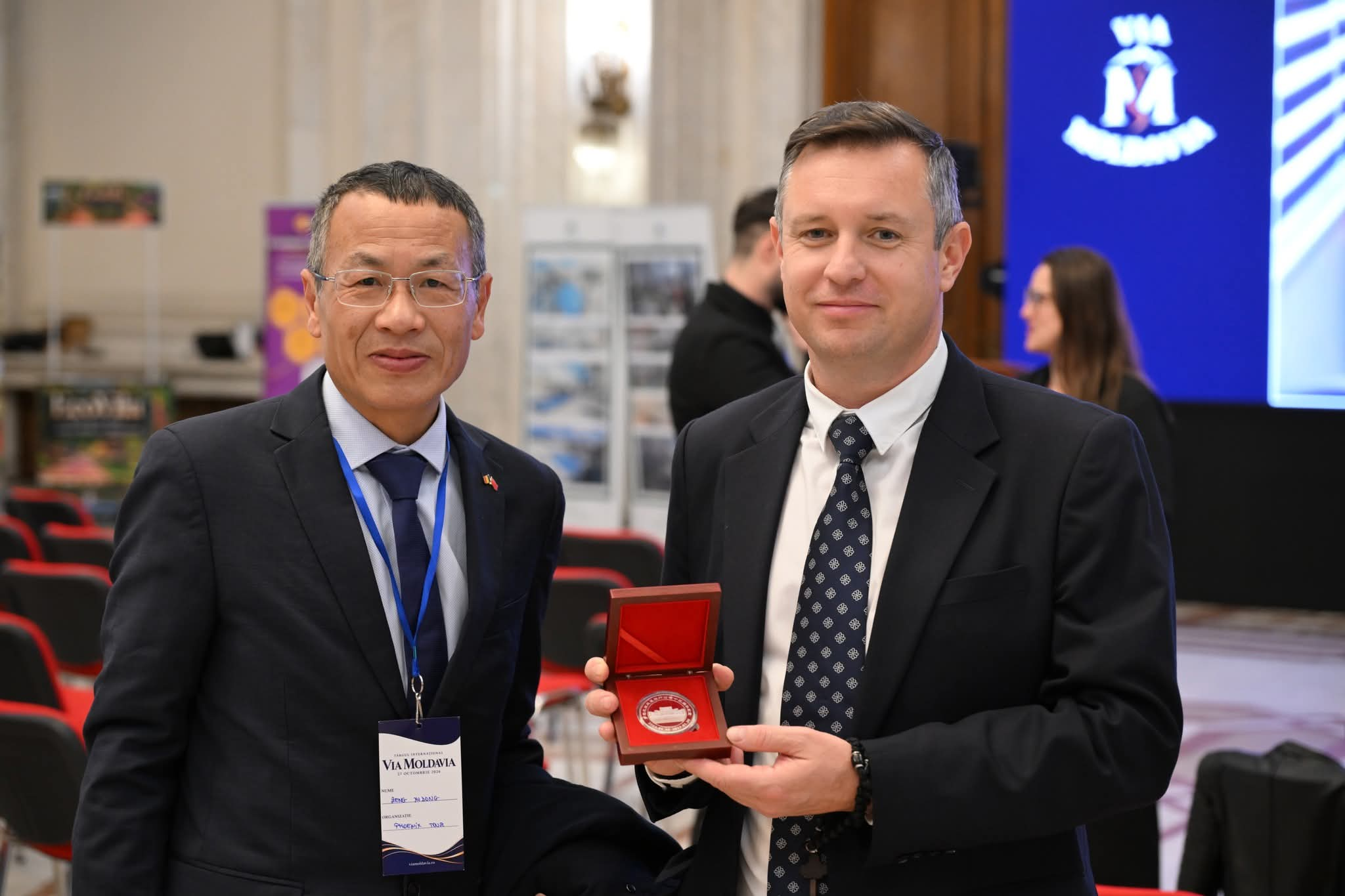
On Friday, 25 September 2026, the VIA MOLDAVIA Program arrived in Vama, Suceava County, for the territorial meeting dedicated to the TransRarău Micro-destination and ski area.
Organised by the Centre for Analysis and Planning of Regional Development (CAPDR), the meeting brought together representatives of local public administration, the hospitality industry and the local community in a joint effort to identify, connect and capitalise on the territory’s tourism resources.
TransRarău is thus taking shape as part of a broader regional development process: VIA MOLDAVIA, the program connecting tourism destinations in Romania and the Republic of Moldova, transforming the heritage of each community into a component of a shared tourism experience.
EVENT PARTICIPANTS:
- Ion ȘTEFANOVICI – President, C.A.P.D.R.
- Tiberiu LUCUTAR – Mayor, Vama Town Hall
- Loredana COCA – Delegate, Sadova Town Hall
- Ramona NIGA – Deputy Mayor, Frumosu Town Hall
- Ramona ALEXOAIE – Manager, Eden Spa Hotel C-lung
- Lenuța SEMENIUC – Administrator, Casa Lucreția
- Tudor FILIP – Administrator, Pension Lucia Bucovina
- Moia-Lucia FILIP – Administrator, Pension Lucia Bucovina
- Gabriela COVATARU – Manager, Pensiunea Ioana
- Alina PANSICIUC – Administrator, Sadova Village
- Alexandra POPA – Reconect Camping
- Ligia HURGHIȘ – Engineer, Vama Forestry District
- Ionuț PRINDII – Engineer, Vama Forestry District
- Doina CERNAT – General Secretary, Vama Town Hall
- Ramona VASILESCU – Accountant, Vama Town Hall
- Petru-Marian CĂLINESCU – Teacher, ,,Iorga Toma” Secondary School
- Marian SASU – Student, ,,Iorga Toma” Secondary School

Vama – a new stage in building the Moldova regional destination
The VIA MOLDAVIA meeting took place at the Vama Cultural Centre, starting at 10:00 a.m., in a setting dedicated to cooperation between local public administrations, economic operators and community representatives.
The choice of Vama as the location for this meeting provided an opportunity to approach the tourism development of the entire territory from an integrated perspective, starting from the resources of each locality and the possibilities of connecting them through joint tourist circuits.
The meeting was attended by Ion ȘTEFANOVICI, President of CAPDR, Tiberiu LUCUȚAR, Mayor of Vama, as well as representatives of the Frumosu Town Hall, the local administrative apparatus and the educational community in Vama.
The participation of representatives of public administration, the private sector and the local community provided a framework for addressing the territory’s tourism potential from the perspective of inter-community cooperation, integrated promotion and the development of tourism experiences that capitalise both on established attractions and on places less familiar to the general public.
Within the VIA MOLDAVIA Program, each community preserves its identity and contributes its own resources to the development of a regional destination with a diversified tourism offer.

Tourism operators – partners in developing the TransRarău Micro-destination
Alongside local administration representatives, the meeting brought together tourism operators and hospitality industry representatives, including Eden Garden Hotel & Spa, Casa Lucreția, Pensiunea Ioana and Sadova Village.
The presence of tourism operators highlighted the diversity of accommodation capacities and services available in the territory, as well as the opportunity to develop tourism packages bringing together mountain experiences, local gastronomy, cultural heritage and leisure activities.
Within this framework, hotels, guesthouses and holiday homes represent direct partners of the VIA MOLDAVIA Program, through their ability to integrate accommodation and hospitality services into tourism circuits intended for visitors from Romania, the Republic of Moldova and other international markets.
A tourism micro-destination develops its attractiveness through the diversity of experiences offered, the quality of services and the ability of operators to collaborate in promoting the entire territory.
Through VIA MOLDAVIA, the beauty of the places and the investments made by local operators can be brought together in a regional tourism offer, accessible to a wider audience and integrated into cross-border tourism circuits.

TransRarău Micro-destination – a territory built around the mountain and its communities
From the perspective of VIA MOLDAVIA’s development, the TransRarău Micro-destination brings together localities, natural attractions, accommodation facilities and tourism experiences that can be connected within an integrated territorial system.
Vama, Sadova, Frumosu, Stulpicani and Câmpulung Moldovenesc are important localities in shaping this micro-destination, each contributing its own natural, cultural and economic resources to the tourism identity of the territory.
Vama offers the setting of a Bucovinian village, with its traditions, local households, cultural heritage and opportunities for rural tourism development. Its location along the main access routes to the mountain area makes it a connecting point between the cultural, gastronomic and tourism experiences of the surrounding communities.
Sadova brings to the forefront the beauty of the mountain landscape, Lake Iezer and tourism facilities that capitalise on the tranquillity, nature and hospitality of the area. Its location near the municipality of Câmpulung Moldovenesc allows it to be integrated into a diversified tourism offer focused on relaxation and the discovery of natural heritage.
Frumosu complements this tourism geography through its rural landscapes, local heritage and connections with neighbouring communities. Traditions, households and local products can become components of circuits dedicated to the authenticity of the Bucovinian village.
Stulpicani represents an important component of the mountain territory, offering opportunities for rural tourism development, nature-based experiences and circuits connecting settlements at the foot of the Rarău Mountains with the Bistrița Valley.
Câmpulung Moldovenesc is an important tourism services centre and a gateway to the Rarău Massif. Accommodation infrastructure, gastronomy, cultural attractions, leisure services and the ski area contribute to the development of an attractive year-round tourism offer.
In addition to these localities, Pojorâta and Chiril represent the access points to the TransRarău mountain road, through which the connection between Bucovina and the Bistrița Valley takes on a spectacular tourism dimension.
Thus, the micro-destination can be promoted as a set of complementary tourism experiences, in which each locality and each operator contributes to the value of the territory as a whole.

The TransRarău Road – a panoramic journey through the heart of the mountains
TransRarău is one of Bucovina’s most spectacular mountain routes, crossing the Rarău Massif and offering views of forested ridges, deep valleys and rock formations that define the identity of this area.
The mountain road connects Pojorâta, on the northern slope, and Chiril, on the southern slope, through the high-altitude area of the Rarău Mountains.
For tourists travelling from Câmpulung Moldovenesc, the journey can continue towards Pojorâta and then, along the winding TransRarău road, towards the mountain peaks.
As the road gains altitude, the landscape gradually changes. Dense forests open onto meadows and panoramic viewpoints, while the massif reveals its unmistakable silhouette.
One of the landmarks of this journey is Pietrele Doamnei, the emblematic rock formations of the Rarău Mountains.
From the high-altitude area of the massif, the route continues towards Chiril, providing an opportunity to connect with the Bistrița Valley and other tourism destinations in the region.
For the VIA MOLDAVIA Program, this road represents a tourism resource that can support the development of thematic circuits dedicated to mountain landscapes, cultural heritage, hiking and nature-based experiences.

Proposed tourism routes and connections within the micro-destination
Main mountain route
Câmpulung Moldovenesc – Pojorâta – TransRarău – Pietrele Doamnei – Chiril – Bistrița Valley
A panoramic circuit connecting the main landmarks of the Rarău Massif with neighbouring micro-destinations.
Rural and cultural route
Vama – Frumosu – surrounding rural communities
Experiences dedicated to local heritage, gastronomy, traditional products, Bucovinian households and rural hospitality.
Nature and relaxation route
Câmpulung Moldovenesc – Sadova – Lake Iezer
An experience that can combine accommodation, relaxation services, landscape photography and the discovery of Bucovina’s natural heritage.
These routes represent directions for tourism integration within VIA MOLDAVIA and can be developed together with local administrations and economic operators, depending on available infrastructure, accessibility and the specific nature of each experience.

Lake Iezer – mountain tranquillity and the charm of Bucovina’s legends
Following the meeting in Vama, the field visits took us to Lake Iezer, located in Sadova commune, in the Obcina Feredeului Mountains.
Surrounded by forests, with its calm waters reflecting the sky and wooded slopes, Lake Iezer offers visitors an experience of closeness to nature, in a setting of exceptional beauty.
The charm of the place is enhanced by the legend of a hidden treasure at the bottom of the lake, a story that adds a cultural and historical dimension to the landscape.
Within VIA MOLDAVIA, Lake Iezer can become a landmark of tourism circuits combining hiking, landscape photography, relaxation in nature and the discovery of local traditions and legends.
The field visits provided an opportunity to discover two complementary perspectives on Bucovinian hospitality: contemporary hotel comfort and services, on the one hand, and the charm of welcoming homes, local products and authentic gastronomic experiences, on the other.
From the relaxation facilities at Eden Garden Hotel & Spa to the warm and family-like atmosphere of Casa Lucreția, these experiences highlight the diversity of the tourism offer that can be integrated into the VIA MOLDAVIA Program.

Eden Garden Hotel & Spa – comfort, relaxation and mountain experiences
One of the highlights of the field visits was Eden Garden Hotel & Spa, where we had the opportunity to discover the accommodation infrastructure and facilities dedicated to relaxation and leisure.
The accommodation facilities, indoor swimming pool and SPA facilities complement the micro-destination’s hospitality offer, creating opportunities for tourism programs that combine mountain activities with contemporary hotel services.
In a region where the mountains represent one of the main tourism resources, the development of such accommodation and leisure facilities contributes to diversifying the services available and increasing the destination’s attractiveness.
From the perspective of VIA MOLDAVIA, these facilities represent important components of integrated tourism circuits, through their ability to provide accommodation and relaxation services to tourists choosing to discover the Rarău Mountains and neighbouring localities.
A day spent travelling through the mountain roads can continue with moments of relaxation by the pool, a gastronomic experience and an evening spent in the comfort of a modern hotel.
This complementarity between nature, leisure and hospitality services represents one of the development directions for VIA MOLDAVIA tourism packages.

Casa Lucreția – a cosy experience in the spirit of Bucovinian hospitality
A special experience during the field visits was discovering Casa Lucreția, a welcoming location with a warm, family-like atmosphere, where the charm of a Bucovinian home is combined with attention to detail and a passion for local products.
CasaLucretia is one of those cosy places that invites you to enjoy the tranquillity of the setting, the hospitality of the hosts and the pleasure of simple things, prepared with care and dedication.
The interior, arranged in an intimate and welcoming style, together with the furniture, decorative elements, paintings and spaces dedicated to showcasing local products, creates an atmosphere in which visitors can feel as if they were in a traditional Bucovinian home.
Here we discovered a variety of products presented with care and passion: jams, syrups, preserves, fruit and vegetable preparations, aromatic herbs and other delicacies that evoke the traditions of Bucovinian households.
The visit also took us into the kitchen, where the preparation of homemade dishes highlights one of the most valuable components of regional tourism: authentic gastronomy.
In such places, the tourism experience is built around simple and memorable gestures: a conversation with the host, discovering a local product, the aroma of a freshly prepared dish and the joy of learning the story of the people who bring the place to life.
The beauty of Bucovina can be found both in the grandeur of its mountains and in the warmth of its homes, the taste of its local products and the people who keep the traditions of this land alive.
For VIA MOLDAVIA, Casa Lucreția represents an example of how hospitality, gastronomic experiences and the valorisation of local products can contribute to the development of an authentic regional tourism offer.
Integrating such locations into tourism circuits allows visitors to discover Bucovina through direct encounters with its people, culinary traditions and the atmosphere of local households.
From hotels with SPA facilities to family-run guesthouses and traditional-style holiday homes, the diversity of the tourism offer represents an important resource for the development of the TransRarău Micro-destination.
VIA MOLDAVIA aims to transform these individual experiences into an integrated tourism offer through which every visitor can discover both the beauty of the places and the authenticity of the communities that bring them to life.

TransRarău – a destination for all seasons
The beauty of TransRarău reveals itself differently in every season.
Spring brings the freshness of the forests and the beauty of mountain landscapes coming back to life.
Summer opens the season for hiking, panoramic routes and outdoor leisure experiences.
Autumn dresses the slopes of the Rarău Mountains in shades of gold and copper, turning every journey into a distinctive visual experience.
Winter brings the charm of snow-covered landscapes and the possibility of developing tourism programs dedicated to seasonal sports.
From this perspective, the ski area represents an important component of the territory’s tourism development.
Integrating winter activities with accommodation, gastronomy and relaxation services can contribute to extending the tourism season and diversifying the experiences available within the micro-destination.
Through VIA MOLDAVIA, these resources can be promoted through seasonal tourism packages and circuits connecting TransRarău with the region’s other mountain and cultural destinations.

VIA MOLDAVIA – connecting micro-destinations into a regional tourism offer
The meeting in Vama continues the series of VIA MOLDAVIA territorial meetings through which CAPDR seeks to identify, organise and promote tourism micro-destinations in Romanian Moldova and the Republic of Moldova.
The TransRarău Micro-destination complements this tourism geography through its mountain resources, the heritage of Bucovinian communities and its diversified accommodation and leisure offer.

The TransRarău – Bistrița Valley connection
One of the directions for tourism integration is connecting TransRarău with the Bistrița Valley Micro-destination through the mountain route descending towards Chiril.
From the perspective of VIA MOLDAVIA, such connections can transform a visit lasting a few hours into a multi-day tourism experience, with stops for accommodation, gastronomy, cultural visits and leisure activities.

The TransRarău connection – the other micro-destinations of Bucovina
Through Câmpulung Moldovenesc and Vama, TransRarău can be connected with the Ariniș – Gura Humorului Micro-destination, the Suceava Fortress Micro-destination and the circuits dedicated to the Monastery Region.
Each micro-destination thus contributes to the development of a broader regional circuit through which local heritage becomes part of a shared tourism offer.

Romania – Republic of Moldova: a regional destination open to international markets
VIA MOLDAVIA develops a regional perspective on tourism, based on the complementary natural, cultural and economic resources of Romania and the Republic of Moldova.
Through this approach, VIA MOLDAVIA aims to transform the region’s tourism potential into an integrated offer accessible to national and international markets.

TransRarău, in preparation for the VIA MOLDAVIA International Tourism Fair
An important stage in promoting the destinations brought together within the VIA MOLDAVIA Program is the VIA MOLDAVIA International Tourism Fair, organised at the Palace of Parliament in Bucharest from 26–28 October 2026.
VIA MOLDAVIA thus provides a framework connecting the beauty of each territory, local economic initiative and opportunities for promotion on international tourism markets.

A region is discovered through its places. It is built through its people.
The meeting in Vama and the field visits gave us a picture of a territory where the beauty of nature, cultural heritage and local economic initiative come together in an area with multiple development opportunities.
Through every connected community, every integrated tourism operator and every developed circuit, the Moldova regional destination gains an increasingly well-defined identity, open to tourists from Romania, the Republic of Moldova and from around the world.

From selection to tourism products
An important objective of the VIA MOLDAVIA process is to transform local resources into tourism products that can be presented and marketed.
The process follows the logic:
SELECT → VALIDATE → BUILD → TEST → SELL.
For each product, concrete elements are considered, such as the route, included services, capacity, period, indicative price, target audience and sales channel.
In the case of TransRarău and the ski area, this stage will make it possible to structure combinations of activities, services, experiences and attractions so that the offer can be presented in a clear format both to individual tourists and to partners in the tourism industry.
The aim is for the resources identified within the micro-destination to become routes, experiences, packages and circuits that are easy to understand and market.
From territory to digital experience
Following the identification and validation stage, relevant information will be able to enter the VIA MOLDAVIA digital development workflow.
The program methodology provides for a process of proposal, profiling, validation, translation, publication and updating, through which information collected in the territory is prepared for integration into the back office and the application designed for tourists.
This stage is important so that the micro-destination’s offer can be easily discovered and used.
Tourists will need not only information about an attraction, but answers to concrete questions: what can I do, where can I go, how do I get there, how much time do I need, where can I eat, where can I stay and what can I visit next?
Transforming territorial information into a digital experience contributes precisely to facilitating these decisions.
What the VIA MOLDAVIA meeting builds, in concrete terms
The working process aims to provide a clear and operational picture of the micro-destination: what resources exist, where they are located, how they can be accessed, how they can be connected and what tourism products can be built from them.
The expected results include the development of an operational map of the micro-destination, the inventory and geolocation of resources, the identification of regional connections, the configuration of the first routes and circuits, the development of initial tourism product sheets and the preparation of information for integration into the VIA MOLDAVIA system.
At the same time, the process contributes to identifying the elements that need to be developed or completed so that the offer can be promoted and marketed.
Thus, the meeting does not represent the end of a process, but a stage in building a destination that will continue to be developed, validated and connected to the regional network.
Calendar of VIA MOLDAVIA Meetings – Northern Route:

The first meeting in this series took place in Târgu Neamț on 1 September 2026, and was dedicated to the RN-02 – Târgu Neamț – Neamț Fortress, monasteries and the Bison Land micro-destination. The meeting focused on identifying tourism resources and building an experience connecting heritage, spirituality, nature and local hospitality.
On 3 September 2026, the process continued in Bicaz, for the RN-01 micro-destination, focusing on nature, landscapes, leisure and local experiences. The territory analysed brings together Bicaz, Bicazu-Ardelean, Bicaz-Chei, Tarcău, Ceahlău, Hangu, Grințieș and Durău. The meeting emphasised the need to connect resources and transform them into tourism experiences and products.
On 8 September 2026, at the Panoramic Complex in Slănic Moldova, CAPDR organised a new VIA MOLDAVIA working meeting dedicated to the Trotuș Valley Micro-destination – spa tourism, nature, heritage and leisure, as part of the process of identifying, connecting and capitalising on local tourism resources through integrated products and experiences.
Within the VIA MOLDAVIA program, on 10 September 2026, CAPDR organised a working meeting in Gura Humorului dedicated to the RN-07 – Ariniș and Gura Humorului ski area Micro-destination, focusing on the identification and capitalisation of local tourism resources.
VIA MOLDAVIA working meeting dedicated to the Drumul Talienilor Micro-destination, held on 21 September 2026 in Mălini, Suceava County, brought together representatives of public administration, the tourism, forestry and business sectors to build an integrated tourism offer.
On 28 September, VIA MOLDAVIA will dedicate a new meeting to RN-05 – Monastery Region, to be held at Sucevița Town Hall. The micro-destination will bring together Sucevița, Voroneț, Dragomirna, Putna and the surrounding monastic area, following an approach focused on integrating heritage into a regional tourism circuit.

On 2 October, the series will continue with RN-04 – Dorna Basin, with the meeting hosted by Șaru Dornei Town Hall. The indicative area of this micro-destination includes Șaru Dornei, Dorna Arini, Panaci, Dorna Candrenilor, Vatra Dornei and Poiana Stampei.
On 6 October, the program will have a stage dedicated to RN-14 – Chișinău, Republic of Moldova. The meeting is scheduled to take place at the Ministry of Economic Development and Digitalisation in Chișinău and will have the Republic of Moldova as its indicative territorial area, strengthening the perspective of connecting the VIA MOLDAVIA network with the Romania–Republic of Moldova cross-border component.

On 9 October, the calendar provides for the meeting dedicated to RN-10 – Cultural Botoșani – memorial houses and cultural heritage. The date has been set, while the location is to be confirmed. The micro-destination will have the municipality of Botoșani and the surrounding territory as its indicative area.
As part of the continuation of the calendar, the meeting dedicated to RN-11 – Iași – business tourism, city breaks and religious tourism will take place on a date yet to be confirmed. The micro-destination will have the municipality of Iași and the surrounding territory as its indicative area.
The meeting for RN-15 – Red Lake, with the indicative territorial area of Red Lake / Harghita, is also scheduled for a date to be confirmed. It will complete the series of micro-destinations included in the VIA MOLDAVIA calendar.
TransRarău – a mountain experience integrated into a regional network
Through the meeting in Vama, the VIA MOLDAVIA process added another important component to the development of the Northern Route.
TransRarău and the ski area are analysed not only from the perspective of individual resources, but as part of a territory where landscape, mobility, mountain activities, services, gastronomy, events and hospitality can be brought together into a coherent tourism experience.

By connecting localities and local stakeholders, mapping resources and building tourism routes and products, the micro-destination can become easier to discover and integrate into journeys through northern Moldova and Bucovina.
Within the VIA MOLDAVIA approach, each micro-destination builds its own offer, but its value increases when it is connected to a broader network:
The micro-destination builds the local offer. The Route connects it regionally. The network validates it. The application personalises it for the tourist. The market turns it into a commercial product.
TransRarău and the ski area thus enter a process of building a tourism destination capable of bringing local experiences together into a coherent offer and contributing to transforming the Northern Route into a connected, diverse and accessible tourism area for visitors.